
Most people don’t quit exercising because they lack willpower. Research suggests many people abandon a new exercise habit within the first 90 days — some reports cite drop-off happening within weeks, others within five to six months. The problem usually isn’t motivation — it’s that the plan was never designed to last. Sustainable exercise habits aren’t built on intensity or bursts of determination, but on reducing friction, embracing consistency, and making movement feel inevitable rather than optional.
Inside this article:
TL;DR: Building an exercise habit you’ll actually keep comes down to starting smaller than you think you need to, reducing friction so that showing up takes less effort, attaching movement to existing daily routines, measuring consistency rather than physical results, and bouncing back quickly when you fall off track. Research suggests that around 80% of new gym members quit within five months — not because they lack willpower, but because they build plans that demand perfection. The exercise habits that last are built on small, repeatable actions designed to survive real life. Start smaller. Stay longer. That’s the strategy.
1. Stop Thinking Like an Athlete
Most people approach exercise as if they’re training for a competition — and that’s precisely why they quit. When motivation strikes, the instinct is to go big: five sessions a week, early mornings, hour-long workouts. It’s an admirable vision. But it’s also a fragile one.

Think of exercise as a skill, not a performance. Skills develop through repetition, not through bursts of maximum effort followed by weeks of recovery from burnout. The question isn’t “How hard should I push?” — it’s “What’s the smallest version of movement I can repeat consistently?”
Small Starts That Actually Work
Starting small doesn’t mean staying small forever. It means giving the habit room to take root before you ask more of it. Examples of genuinely sustainable starting points:
- A 10-minute walk after lunch
- Five minutes of stretching before bed
- Two bodyweight exercises while your coffee brews
- A single flight of stairs taken deliberately
It may not feel impressive. That’s entirely the point. Small actions are easier to repeat, and repetition is what creates identity. You’re not trying to crush a workout — you’re becoming someone who moves regularly.
The Kaizen Method: How Small Steps Lead to Big Changes — How tiny, repeated actions compound into meaningful results over time.
Mastering Habits: Building Healthy Habits That Stick for Life — A complete guide to understanding why habits form — and why so many fail.
Key Takeaway: Exercise is a skill built through repetition, not heroic effort. Start with the smallest version of movement you can sustain, and let identity follow from consistency.
2. Make It Easy to Start
The hardest part of exercise is rarely the workout itself — it’s the moment before you begin. That brief window between intention and action is where most habits die. The decision fatigue, the minor inconveniences, the mild discomfort of changing clothes or leaving the house — these frictions are small individually, but together they’re enough to derail you.

Reducing friction means engineering your environment so that starting requires as little decision-making as possible. The fewer choices between you and movement, the less willpower you need to consume.
Practical Friction-Reducers
| Friction Point | Simple Fix |
|---|---|
| Deciding what to wear | Lay out workout clothes the night before |
| Choosing a workout | Have one default routine for busy days |
| Remembering to move | Exercise at the same time each day |
| Equipment out of sight | Keep trainers or a mat visible and accessible |
Motivation is unreliable. It spikes and fades with mood, sleep quality, and stress levels. Systems are what carry you when motivation disappears. The easier it is to begin, the less you depend on feeling ready.
Health Stacking: How to Build New Healthy Habits That Stick — How layering healthy habits together reduces the mental effort required to follow through.
The Empower Process: A Smarter Approach to Habit Formation — A structured framework for building habits that survive real life.
Key Takeaway: Cut the friction between intention and action. The easier it is to start moving, the less your habit depends on willpower or motivation.
3. Lower the Bar on Bad Days
All-or-nothing thinking is one of the biggest reasons exercise habits collapse. When people can’t complete their full planned session, they often do nothing at all — which means missing once becomes missing repeatedly. The belief that a workout only “counts” if it’s long enough or hard enough is quietly dismantling thousands of otherwise solid routines.

The solution is to define what success looks like on your worst days, not just your best ones. Create a minimum version of movement you can always complete — even when everything else has gone sideways.
Your Two-Level Habit Plan
- Standard: Your full workout — 30 to 45 minutes, planned sessions, optimal effort
- Minimum: Five to ten minutes of any movement that keeps the habit alive
On stressful, exhausting, or chaotic days, the minimum version is not a failure — it’s a strategy. It preserves the routine, reinforces your identity as someone who shows up, and maintains the neural pathways that make consistency automatic over time. Research suggests it takes an average of 66 days to form a habit. Most people quit before reaching that threshold, never allowing the behaviour to become truly automatic. Lowering the bar on hard days is what bridges that gap.
Why Most Habits Fail — and Why Others Succeed — The psychological reasons habits collapse, including the all-or-nothing thinking that derails exercise routines.
Self-Discipline Isn’t Sexy — But It’s the Only Way Out — A clear case for showing up even when conditions aren’t ideal.
Key Takeaway: Define a minimum version of success for hard days. Five minutes of movement keeps the habit alive far more effectively than doing nothing because your ideal session wasn’t possible.
4. Attach Movement to What You Already Do
Habits form faster when they’re anchored to behaviours you already perform automatically. This principle — known as habit stacking — works by using an existing routine as the trigger for a new one. Instead of finding space in a busy day, you slot movement directly into the rhythm of your life.

The existing behaviour becomes the cue. Over time, the new action starts to feel less like a decision and more like the natural next step in a familiar sequence.
Habit Stacking in Practice
- After brushing your teeth → 10 squats
- After your morning coffee → a short walk outside
- After shutting your laptop → five minutes of stretching
- After dinner → a walk around the block
- After your morning shower → a brief mobility routine
The key is specificity. Vague intentions like “I’ll move more” have almost no power. Precise stacks — “After I close my laptop, I will stretch for five minutes” — activate the same automatic processing your brain uses for established habits. With enough repetition, the trigger reliably produces the behaviour without conscious effort.
Habit Stacking: The Fastest Way to Build Habits That Stick — The full habit stacking method with practical examples across different areas of life.
Building a Wellbeing Routine: Habits for Mental and Physical Health — How to structure a daily routine that supports both physical and mental health.
Key Takeaway: Pair movement with something you already do automatically. Habit stacking removes the need to find motivation by turning exercise into the natural next step in an existing routine.
5. Find Exercise You Actually Enjoy
If exercise feels like punishment, your brain will eventually find a way to avoid it. Humans are remarkably good at resisting anything that carries a negative emotional charge — and no amount of discipline fully compensates for dread. The most sustainable form of movement is the kind you don’t spend energy avoiding.

This isn’t a soft option. It’s neuroscience. Dopamine — the neurotransmitter associated with motivation and reward — is released in anticipation of experiences we associate with pleasure. When you genuinely enjoy a form of movement, your brain begins to work with your habit rather than against it.
There Is No Perfect Workout
The best exercise is the one you’ll actually repeat. That might be:
- Swimming or cycling
- Hiking or running outdoors
- Strength training or yoga
- Team sports or martial arts
- Dancing, climbing, or walking with a friend
You are not obligated to go to a gym. You are not required to run if you hate running. The exercise habit that lasts is the one shaped around you — your preferences, your environment, your energy levels. Enjoyment is not a luxury in habit formation. It’s a strategy.
The Benefits of Outdoor Activities for Physical and Mental Health — Why nature-based movement reduces stress and makes exercise easier to enjoy and repeat.
7 Low-Impact Movements That Improve Your Mind and Body — Accessible movement options for anyone still searching for exercise they actually look forward to.
Key Takeaway: Choose movement you genuinely enjoy. Enjoyment drives dopamine, and dopamine drives consistency. There is no universally correct workout — only movement you’re willing to repeat.
6. Track Consistency, Not Results
One of the most common reasons people abandon exercise is that visible results take far longer than expected. Fitness changes happen slowly and unevenly. Body composition shifts over months, not weeks. If physical appearance is your only measure of progress, motivation will run dry before the results arrive.

The solution is to track what you can control — and to recognise that some of the most meaningful benefits of movement appear long before anything changes in the mirror.
What’s Worth Tracking Early
- The number of days you moved this week
- Whether you kept your promise to yourself
- Energy levels and sleep quality after exercise
- Mood improvements throughout the day
- Gradual gains in strength, endurance, or flexibility
These signals are real, measurable, and they appear early. Tracking them builds evidence that movement is working — evidence that sustains motivation during the weeks when physical changes remain invisible. Consistency itself becomes the reward, and the habit strengthens accordingly.
26 Powerful Life-Changing Wellness Habits That Actually Work — How to build exercise into a wider system of wellbeing habits rather than treating it in isolation.
How to Create a Wellbeing Journal to Track Your Progress — A simple tracking system that keeps you accountable without adding pressure.
Key Takeaway: Track consistency and how movement makes you feel — not just physical change. Early signals like improved energy and mood are powerful evidence that your habit is working.
7. Expect Imperfection and Restart Quickly
You will miss workouts. That is not a prediction of failure — it is a certainty of life. Work pressures, illness, travel, poor sleep, and low motivation will all intervene at some point. The difference between people who maintain exercise habits for years and those who quit is not that the former never fall off track. It’s that they restart faster.
Missing once is life. Missing repeatedly, without returning, is where habits unravel entirely. The guilt that follows a missed session is often more damaging than the missed session itself — it creates an emotional barrier to returning that makes absence feel permanent.
The Restart Rule
When you fall off track, apply a simple rule: skip the self-criticism and return to the minimum version of the habit as quickly as possible. Not the full session. Not the ambitious version. Just the smallest form of movement that reconnects you to the identity of someone who shows up.
Progress isn’t built by never stopping. It’s built by always beginning again — without drama, without punishment, without needing to “make up for” what was missed.
19 Powerful Strategies to Turn Setbacks into Success — Concrete strategies for bouncing back quickly when your exercise habit hits a wall.
Self-Criticism: 10 Simple Ways to Be Kinder to Yourself — How to build the self-compassion that long-term habit maintenance actually requires.
Key Takeaway: Missing a workout is normal. Returning quickly — without guilt, without overcompensating — is the skill that separates long-term exercisers from those who quit.
8. Make It Part of Who You Are
The most powerful shift in building any lasting habit is moving from “I’m trying to exercise more” to “I’m someone who moves regularly.” Identity-based habits are far more resilient than goal-based ones, because identity doesn’t require daily motivation to maintain. It simply requires acting like yourself.

Every small workout, every minimum session on a hard day, every quick walk after lunch is a vote cast for that identity. Individually, these moments feel insignificant. Cumulatively, they rewrite how you see yourself — and how you behave as a result.
The Long View
Exercise done inconsistently at maximum effort produces very little. But small amounts of movement, repeated over months and years, can meaningfully improve your energy, resilience, sleep quality, cognitive performance, and long-term health. This isn’t motivational language — it’s what the research consistently shows.
The goal isn’t to love every workout. It’s to become someone who keeps showing up, even imperfectly. Start smaller than you think you need to. Stay consistent longer than you think matters. That is how exercise stops being something you try to do — and becomes part of who you are.
The Power of Habit: How to Build and Break Habits for Growth — The science behind how habits become automatic and tied to identity over time.
12 Daily Habits to Help You Live a More Purposeful Life — How exercise fits into a broader set of daily choices that shape who you’re becoming.
Key Takeaway: Shift the goal from “doing exercise” to “being someone who moves.” Identity-based habits are far more durable than outcome-based goals — because identity survives the days when motivation doesn’t.
How Small Starts Become Lasting Habits
Building an exercise habit isn’t about more willpower or the perfect programme — it’s about creating a routine that fits your real life.
Start here:
- Choose one form of movement you enjoy and commit to it for 30 days
- Attach it to an existing daily habit
- Decide your “minimum” for hard days
- Remove one barrier — lay out clothes, set a time, or keep equipment visible
- Track consistency, not results
You don’t need a perfect plan. You need one you’ll actually follow. Start small, stay consistent, and let imperfect repetition turn exercise into part of who you are.
Frequently Asked Questions
How long does it take to build a sustainable exercise habit?
Research suggests it takes an average of 66 days for a behaviour to become truly automatic — though this varies depending on the person and the complexity of the habit. The early weeks are the most fragile. Focusing on showing up consistently, even for minimum sessions, is what carries you through the formation period and turns exercise into something that feels natural rather than forced.
What should I do if I keep missing workouts?
Start with the minimum version of your habit rather than trying to return to your full routine. Missing once is unavoidable — missing repeatedly without returning is where habits actually unravel. Remove guilt from the equation as quickly as possible, because the emotional barrier created by self-criticism is often more damaging than the missed sessions themselves. A short walk counts. A five-minute stretch counts. Keep the chain alive.
Do short workouts actually count toward building a habit?
Yes — in fact, short workouts are often more valuable than long ones when you’re building consistency. The goal in the early stages is to reinforce the identity of someone who moves regularly, not to achieve peak fitness. A ten-minute session that happens reliably does more for long-term habit formation than a sixty-minute session that only occurs when conditions are perfect.
How do I find a form of exercise I actually enjoy?
Experiment broadly before committing. Try outdoor activities, group classes, home workouts, swimming, cycling, or recreational sports. Pay attention to how different forms of movement make you feel during and after — not just while you’re doing them. Enjoyment isn’t always immediate; some activities grow on you after a few sessions. The key is eliminating anything you consistently dread, and doubling down on what feels energising.
Is it normal to feel unmotivated even when you have an exercise habit?
Completely normal. Motivation fluctuates regardless of how established your habit is — mood, sleep, stress, and seasons all affect it. The goal of a well-built exercise habit isn’t to feel motivated every time; it’s to reduce your dependence on motivation altogether. When the habit is strong enough, you show up out of identity and routine rather than enthusiasm. Motivation is a bonus, not a requirement.
How does habit stacking help with exercise consistency?
Habit stacking anchors a new behaviour to something you already do automatically, which removes the need to remember or decide to exercise. Instead of relying on motivation, you use an existing cue — like finishing a meal or closing your laptop — as the trigger for movement. Over time, the connection between cue and action strengthens until exercise simply becomes the next step in a familiar sequence.
Related Articles
Building a Wellbeing Routine: Habits for Mental and Physical Health
Build daily habits that support both mental and physical wellbeing.
Physical Wellbeing: Nutrition, Sleep, and Exercise for Optimal Health
The essential triad for sustaining long-term physical health and energy.
Health Stacking: How to Build New Healthy Habits That Stick
Stack healthy behaviours together for faster, more lasting results.
The Benefits of Outdoor Activities for Physical and Mental Health
Why moving outdoors amplifies both physical and psychological benefits.
26 Powerful Life-Changing Wellness Habits That Actually Work
Evidence-backed wellness habits with measurable impact on daily life.
Further Reading
Atomic Habits by James Clear
The definitive guide to building habits through tiny, consistent changes.
Tiny Habits by BJ Fogg
A behaviour scientist’s method for making new habits effortlessly small.
The Joy of Movement by Kelly McGonigal
Why exercise makes us happier, more resilient, and more connected.
The Power of Habit by Charles Duhigg
How habits work — and how to change them at every level.
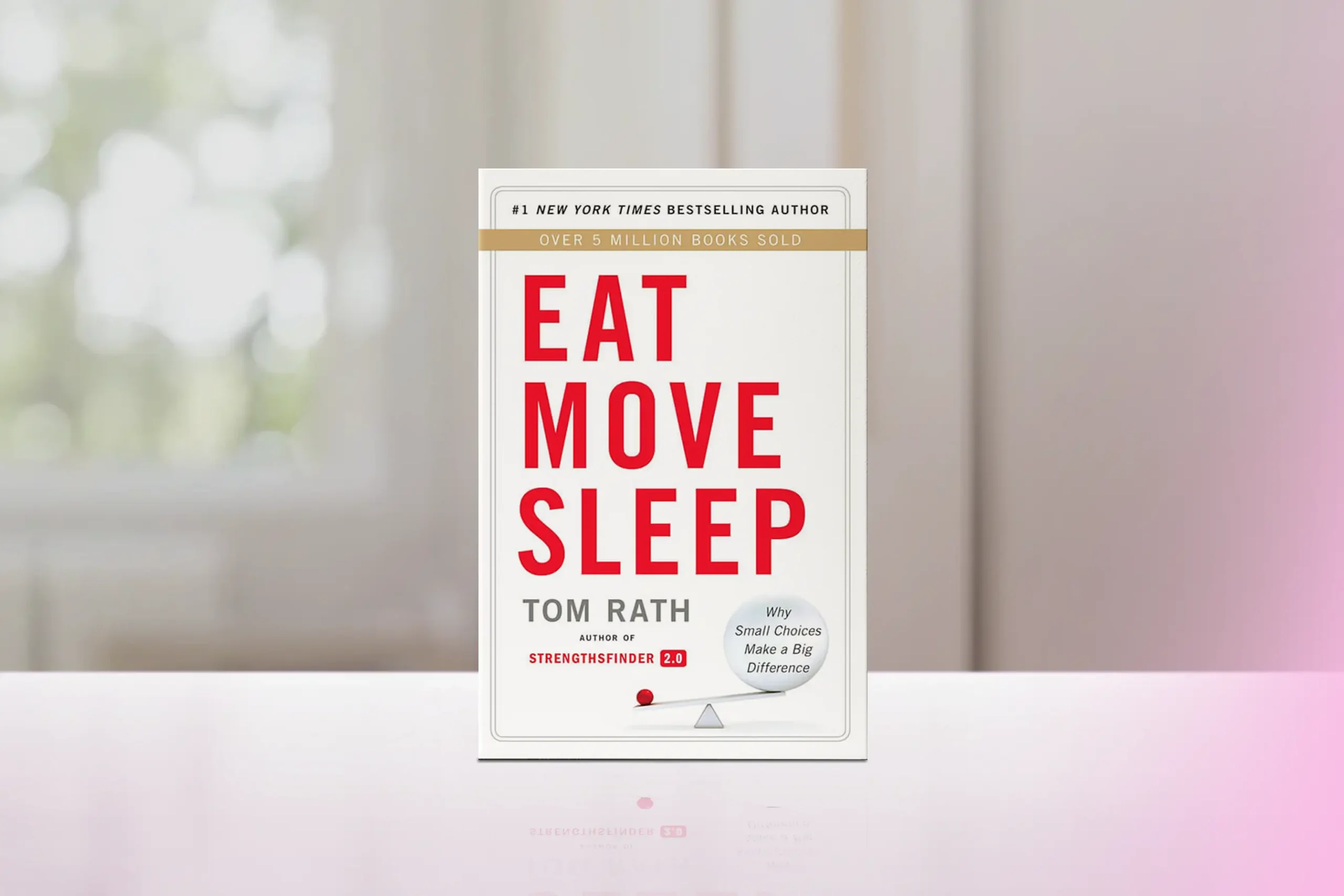
Eat Move Sleep by Tom Rath
Practical guidance on integrating movement, nutrition, and recovery daily.