
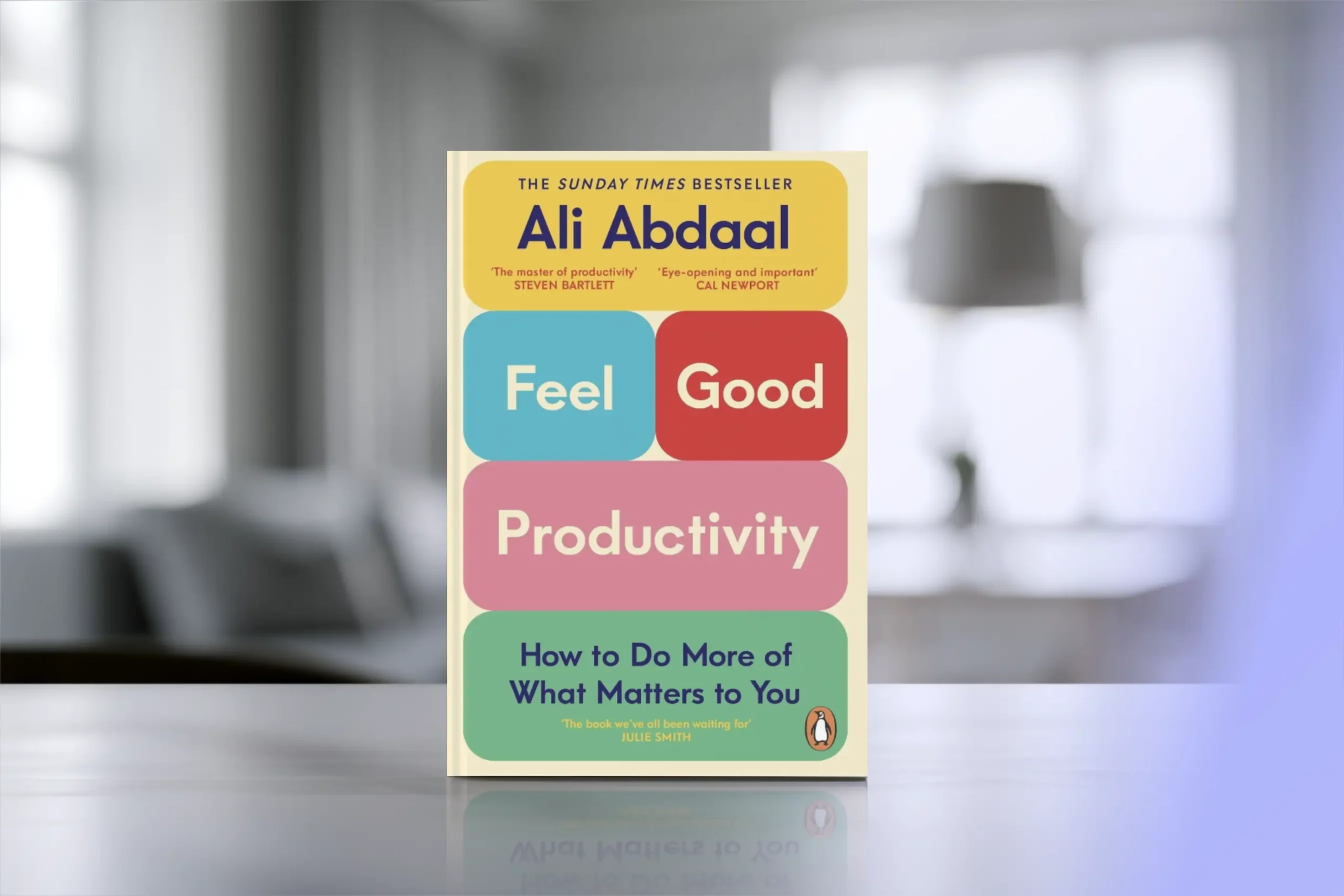
Ali Abdaal‘s Feel-Good Productivity is a warm, experiment-driven case that the fastest route to doing more of what matters is feeling better while you work, first published in 2023.
Written by a Cambridge-trained doctor turned YouTuber, it translates behavioural science — from Barbara Fredrickson’s broaden-and-build theory to research on self-efficacy, procrastination and burnout — into dozens of small experiments you can run this week.
Core Concepts
The book introduces several key ideas that form the foundation of Ali Abdaal’s theory:
- Feeling Good Comes First: Positive emotions broaden your thinking and build your resources over time, so feeling good is the engine of productivity rather than its reward.
- The Three Energisers: Play, Power and People — make the work fun, take ownership of it, and do it alongside others who lift your energy.
- Procrastination Is Emotional: You put things off because of uncertainty, fear or inertia, so the fix is clarity, courage and a small first step — not more discipline.
- NICE Goals: Near-term, Input-based, Controllable and Energising goals that sidestep the tunnel vision SMART goals can create.
- Three Flavours of Burnout: Overexertion, depletion and misalignment each need a different antidote — conserve, recharge or realign.
What ties these together is Abdaal’s insistence that you treat yourself as a laboratory. Every chapter ends with experiments, and a failed experiment still gives you data about how you actually work.
Chapter-by-Chapter Review
Introduction: Why Feeling Good Works
Feel-Good Productivity begins with Ali Abdaal questioning the “work harder” philosophy that carried him through Cambridge and into the NHS until it eventually became unsustainable.
His argument is simple: stress can drive performance in the short term but drains you over time, while positive emotions create sustainable energy. Drawing on Barbara Fredrickson’s broaden-and-build theory, Abdaal argues that feeling good expands creativity and problem-solving while building resilience, stronger relationships and better health.
Chapters 1-3: The Three Energisers
The first section introduces Play, Power and People.
Play asks one of the book’s best questions: “What would this look like if it were fun?” Power explores self-efficacy through the Confidence Switch, the Batman Effect, and focusing on the process rather than the outcome. People explains the difference between energisers and energy vampires, introduces the Benjamin Franklin Effect, and shows why asking for help in person is often more effective than email.
If you only apply one part of the book, make it this one.
Chapters 4-6: Unblocking Procrastination
This is the strongest section of the book.
Abdaal reframes procrastination as an emotional response rather than a character flaw. Uncertainty is tackled with clarity, Fear with affective labelling, the 10-10-10 Rule and the Spotlight Effect, and Inertia by reducing friction, taking the next small step and using the Five-Minute Rule.
The pre-mortem—imagining what happens if you never begin—is one of the book’s most practical techniques.
Chapters 7-9: Making It Sustainable
The final section focuses on preventing burnout by separating it into overexertion, depletion and misalignment, recognising that each needs a different solution.
Conserve introduces the Energy Investment Portfolio and Derek Sivers’ “Hell Yeah or No” principle. Recharge recommends CALM activities—Competence, Autonomy, Liberty and Mellow—while Align uses the Wheel of Life, the Odyssey Plan, and the ideal eulogy to help readers ensure their effort matches what they truly value.
Key Strengths
- Genuinely actionable: Every chapter closes with small experiments you can run in a day, not a system you have to adopt wholesale.
- Research without the dryness: Abdaal cites real studies — including findings that complicate received wisdom, such as the unintended costs of SMART goals — and keeps them readable.
- A better model of procrastination: Treating avoidance as fear, uncertainty or inertia rather than laziness is the reframe most readers will feel immediately.
- Honest about rest: Few productivity books will tell you it’s fine to write off a whole day guilt-free. This one does, and it’s better for it.
- Fast and generous: At around 300 pages with illustrations and plenty of personal anecdote, it never feels like homework.
Potential Drawbacks
- Light on originality: If you’ve already read Atomic Habits, Deep Work or The Power of Full Engagement, much of this will feel like well-packaged revision.
- Unresolved tensions: Advice occasionally pulls against itself — lower the stakes versus find an accountability partner, don’t give up versus write off the day — and Abdaal rarely reconciles the two.
- Synthesis, not investigation: The book draws on other people’s studies and Abdaal’s own life rather than original research or interviews, so the depth is thinner than the citation count suggests.
Who This Book Is For
This book is a valuable resource for a wide range of readers, particularly:
- Newcomers to productivity writing who want one warm, well-organised starting point instead of a stack of them.
- Anyone who has tried discipline-first systems, burned out on them, and needs a different frame.
- Creators, students and freelancers with real control over how their work gets done.
- Chronic procrastinators who suspect fear, not laziness, is what’s actually stopping them.
Final Review
“Feel-Good Productivity” won’t tell most seasoned readers anything they haven’t met before, but it assembles the field’s best ideas into something unusually kind and unusually usable. The reframe at its heart — that you are not lazy, you are blocked, and blocks have causes you can name — is worth the cover price on its own. Start with the Unblock section, run three experiments, and judge it on what changes.
Rating: 4.2/5
A generous, practical entry point to productivity that trades originality for accessibility — reflecting solid reader scores (Goodreads averages around 3.9-4.2 across editions) rather than the hype.
Alternative Books
Here are three related books that further explore this topic:
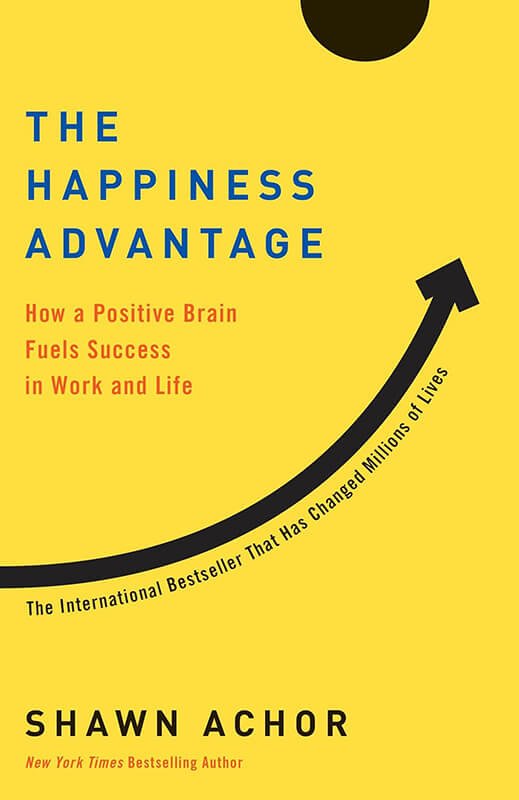
The Happiness Advantage
Shawn Achor’s positive psychology research is the foundation Abdaal’s whole premise rests on: happiness fuels performance, not the other way round.
Rating: 4.6/5
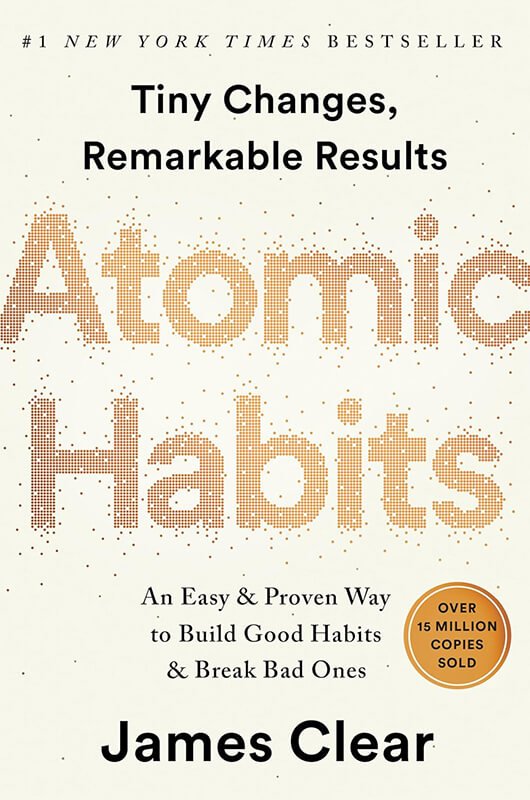
Atomic Habits
James Clear goes far deeper on friction, small steps and progress tracking — the mechanics underneath Abdaal’s “Get Started” chapter.
Rating: 4.8/5
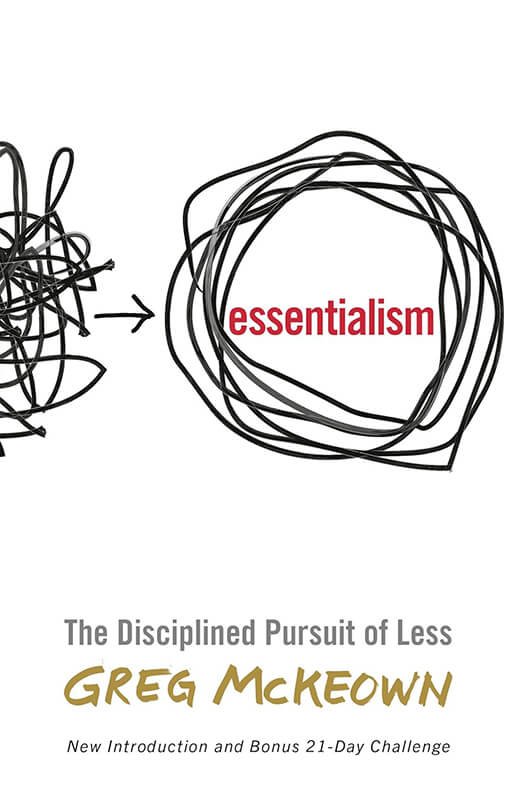
Essentialism
Greg McKeown’s disciplined case for doing less is the sharpest treatment of the overcommitment problem Abdaal tackles in his “Conserve” chapter.
Rating: 4.6/5