
Five years ago, few professionals worried about AI reshaping their work. Today, entire job functions are being redefined and the rules of career success are changing faster than ever. Technology, economic conditions, and workplace expectations can shift overnight, making traditional career paths increasingly unreliable. To build a future-proof career, professionals need flexibility to adapt, experiment, and pivot as opportunities emerge. Agile career planning provides a framework for staying relevant, building resilience, and thriving in a world where the rules keep changing.
Inside this article:

1. The Career Playbook Is Dead
The traditional career model was built for a slower world: where industries evolved predictably, promotions followed linear paths, and a single skillset could last a lifetime. That era is over.
According to the World Economic Forum Future of Jobs Report 2025:
- 39% of core skills will change by 2030
- 40% of today’s skills are already being disrupted by technology
- 50% of all workers will need major skill updates every five years
At the same time, AI is already automating tasks that once defined entire roles: copywriting, data analysis, legal research, customer support, financial reporting. This is not incremental change. It is structural.
Three forces are reshaping careers:
- Role volatility: even strong performers face redundancy as companies reorganise around automation
- Global competition: remote work has expanded talent pools worldwide, raising the bar on what good enough looks like
- Skill compression: the lifespan of valuable skills is shrinking from decades to years
Waiting for stability is no longer a viable strategy. The professionals who thrive are not predicting the future. They are building for adaptability.
What This Means in Practice
Resilient professionals are not focused on a single role or employer. They build capabilities that stay valuable across industries and changing conditions. The key question is no longer “what job do I want in five years?” but “how do I stay relevant no matter what changes?”
Agile career planning applies an iterative, adaptive approach to professional growth. It replaces fixed long-term plans with continuous learning and treats uncertainty as a normal part of career development.
For a clear-eyed look at how AI is reshaping the day-to-day of modern work, read The New AI Work Reality: More Output, Opportunity and Pressure.
Key Takeaway: The old career model assumed stability. Today’s reality demands adaptability. The goal of agile career planning is not to predict the future. It is to ensure you can respond effectively to whatever future arrives.

2. From Plans to Experiments
A five-year career plan assumes you know which skills will be valuable, which roles will exist, and which opportunities will emerge. None of this is reliably knowable in the current environment. Career experiments replace false certainty with useful information.
What a Career Experiment Looks Like
- Taking on a project in an adjacent function to test appetite for a different type of work
- Completing a short course in an emerging area before committing to a full qualification
- Taking contract or freelance work to explore a new industry without leaving your current role
- Volunteering for cross-functional work that exposes you to different parts of the business
- Starting a side project in a domain you are curious about, with no immediate commercial expectation
The Experiment Mindset
Stop treating your career like a plan to execute and start treating it like a series of questions to answer. When you commit to a plan, changing direction feels like failure. When you commit to an experiment, changing direction is the point.
Each experiment answers something concrete: Do I find this type of work engaging? Am I actually good at it? Is this domain growing? Could this become a larger part of what I do? The answers shape your next move — not a destination you feel obligated to reach regardless of what you learn.
Small, low-stakes experiments generate better career intelligence than any amount of planning done at a desk. Run them deliberately, read the results honestly, and let the data lead.
For a practical guide to navigating a larger career shift once your experiments point in a clear direction, read Career Reinvention: How to Successfully Navigate Career Change.
Key Takeaway: Replace the 5-year plan with a series of career experiments. Each experiment generates information about what works, what engages you, and where value is moving, making your next decision better than your last.

3. Build a Skill Portfolio, Not a Job Title
Job titles are brittle. Skills are portable. When a role becomes redundant, the title disappears. The capabilities that made you effective in that role travel with you, and their value is determined by what you can actually do, not what you were called.
Two Layers of Skill Investment
A robust skill portfolio combines capabilities that remain durable across roles and industries with capabilities that respond to current market demand.
Core skills (high durability, high transferability):
- Communication and persuasion
- Complex problem solving and structured thinking
- Leadership and the ability to align others around a goal
- Adaptability and learning agility
- Emotional intelligence and stakeholder management
Market-responsive skills (build these to stay current):
- AI literacy: understanding how to work with, direct, and evaluate AI tools relevant to your domain
- Data analysis: even a functional level of data literacy opens significant doors across most industries
- Industry-specific tools and platforms that are gaining adoption in your field
The Career Lattice
The traditional career ladder assumed you moved upward through a defined hierarchy within a single organisation or profession. Today, many professionals move laterally across industries, functions, and employment models (employed, freelance, portfolio) in ways that look less like a ladder and more like a lattice, and building transferable skills is what makes that lattice navigable.
For a practical framework for staying current without overwhelming yourself, read The Importance of Continuous Learning in Career Development.
Key Takeaway: Investing in your skill portfolio rather than protecting a job title gives you leverage across a much wider range of opportunities, and insulates you from disruption that targets specific roles rather than capabilities.

4. Read the Market Continuously
Agile teams do not build products in isolation. They stay in constant contact with the market, treating user feedback as a strategic input, not a post-launch review. The same discipline applied to your career transforms passive career management into active intelligence gathering.
What to Watch and How Often
- Emerging technologies (monthly): Which tools and platforms are seeing rapid adoption in your sector? Which are being embedded into job descriptions at scale?
- Hiring trends (quarterly): What skills appear repeatedly in roles you might want in the next few years? What is disappearing from job descriptions?
- Salary data (twice yearly): Which specialisms are commanding a premium? Salary data reveals where scarcity and therefore value actually exists
- Industry shifts (quarterly): Which companies, business models, or subsectors are growing? Where is investment flowing?
- Conversations with people doing the work (ongoing): The most reliable market intelligence is qualitative: ask people ahead of you in your field what they are seeing
Practical Signal Sources
- LinkedIn job postings in roles one level above yours (track the skill requirements over time)
- Industry newsletters and analyst reports for your sector
- Salary surveys published by professional bodies and recruitment firms
- Conversations with recruiters, even when you are not actively looking
The goal is not to react to every signal. It is to have enough current information that when a decision point arrives, you are choosing from a position of awareness rather than assumption.
For a broader view of the structural shifts shaping the job market over the next decade, read The Future of Work: Key Trends to Prepare For in Your Career.
Key Takeaway: Continuous market reading replaces the annual performance review as your primary source of career intelligence. The professionals who make the best decisions are those with the freshest information.

5. Develop Career Optionality
Optionality is the ability to choose from multiple viable paths. In investing, you pay a premium for options because they give you the right (but not the obligation) to act. In careers, optionality is built through deliberate preparation that keeps multiple futures viable.
Four Career Paths Worth Keeping Open
Most professionals benefit from keeping at least two of these paths genuinely available:
- Management track: Leading teams, managing resources, organisational influence. Requires investment in leadership and people skills
- Deep specialist track: Becoming the recognised expert in a specific domain. Requires sustained investment in depth over breadth
- Consulting or portfolio track: Offering your skills to multiple clients simultaneously. Requires a strong network and the ability to market your expertise
- Entrepreneurial track: Building something of your own. Requires commercial thinking, risk tolerance, and the ability to operate with uncertainty
How to Build Optionality Practically
- Maintain a visible professional profile even when you are not job-seeking, as it keeps options warm
- Build relationships across industries and functions, not only within your current team
- Develop at least one skill or area of expertise that is marketable outside your current employer
- Take on visible projects that demonstrate capability beyond your current job description
The goal of optionality is not to hedge endlessly. It is to ensure that when circumstances change, you are choosing your next move rather than accepting whatever is available.
For a practical guide to identifying and acting on new career directions in an AI-driven market, read AI Career Pivots: Navigating Change in an AI-Powered World.
Key Takeaway: Optionality is not indecision; it is preparation. Keeping multiple paths viable means that disruption, restructuring, or a change in priorities becomes a choice rather than a crisis.

6. Build Resilience Before You Need It
Career resilience is not about bouncing back from a layoff. It is about building the infrastructure that makes a layoff significantly less damaging before one ever happens.
Many professionals discover their professional network is shallow precisely when they need it most: when they are job-seeking after an unexpected redundancy. Building relationships under pressure, after the fact, is materially harder than maintaining them during stability.
The Four Pillars of Career Resilience
- A strong, maintained network: Regular, low-effort contact with a diverse range of professional connections across organisations, functions, and seniority levels, meaning introductions and opportunities flow without requiring a crisis to activate them
- A clear personal brand: Be known for something specific. Professionals with a clear reputation for a particular capability or perspective are easier for others to recommend and easier for opportunities to find
- An updated portfolio: Keep evidence of your best work accessible and current. This might be a LinkedIn profile, a professional website, a portfolio of case studies, or simply a well-maintained CV that reflects your most recent capabilities
- Multiple income streams or income-stream optionality: Even a small amount of consulting, freelance, or advisory work outside your main role creates both income resilience and network diversity
The Resilience Test
Ask yourself: if your role disappeared tomorrow, how long would it take you to find an equivalent or better position? If the honest answer is “longer than I am comfortable with,” that is the signal to start building resilience now, not later.
For a deeper look at how to build a network that creates genuine long-term value, read The Compound Effect of Networking: Building a Career-Long Advantage.
Key Takeaway: Career resilience is infrastructure. Like any infrastructure, it takes time to build and is most valuable when it is already in place, not when the situation demands it urgently.

7. Stop Chasing Every Trend
One of the most overlooked hazards of agile career thinking is that it can be misread as an instruction to chase every emerging trend, pursue every new certification, and optimise relentlessly. That misreading leads directly to burnout.
Many professionals are already exhausted by:
- The pressure to constantly reskill in response to every new technology announcement
- Networking obligations that feel performative rather than genuinely valuable
- Productivity culture that frames every hour not spent developing as an hour wasted
- The fear of falling behind peers who appear to be learning, building, and optimising continuously
Agile Does Not Mean Frantic
In software development, agile does not mean building everything simultaneously. It means doing the right things at the right time, in order of priority, with regular pauses to assess what is actually working.
The same applies to career development. The goal is not to learn every skill, pursue every opportunity, and maintain every relationship. It is to make well-informed decisions about where to invest limited time and energy based on your long-term strengths, values, and goals.
A Useful Filter
Before pursuing a new skill, certification, or opportunity, ask:
- Does this align with a direction I have deliberately chosen, or am I reacting to external pressure?
- Does this build on existing strengths or require starting from scratch?
- Is the opportunity cost (time, energy, focus) worth the return?
Selective investment, guided by clear values and long-term direction, consistently outperforms scattered optimisation.
If the pressure to constantly optimise is already taking a toll, read Exhausted at Work? How Stress, Deadlines and Overwork Lead to Burnout.
Key Takeaway: Agile career planning is about strategic adaptability, not frantic optimisation. Knowing which opportunities to pursue (and which to decline) is as important a career skill as any qualification you might add.

8. Your 30-60-90 Day Career Plan
Agile career planning only works if it translates into action. Work through the three phases below in sequence.
Phase 1: Foundation (Days 1–30)
- Audit your skills: what you are strong in, what is at risk, and what is missing.
- Run one career experiment: a new project, a side skill, or a conversation with someone in a role you are curious about.
- Update your LinkedIn and CV to accurately reflect your current capabilities.
- Start one market monitoring habit: a newsletter or a weekly scan of relevant job postings.
Success marker: Clear picture of your skills today and one experiment already in motion.
Phase 2: Build Momentum (Days 31–60)
- Review your first experiment. What did you learn? Does this direction have potential?
- Have one career conversation with someone whose path you respect.
- Start building one new skill with a committed weekly time block.
- Design your second experiment based on what the first revealed.
Success marker: One experiment complete, one useful conversation had, second experiment ready.
Phase 3: Sustain and Review (Days 61–90)
- Run your first quarterly career review. What changed? What needs to shift in your strategy?
- Take one concrete step toward a path you want to keep genuinely open.
- Check your resilience: active network, current profile, at least one marketable skill outside your employer.
- Set your next experiment and block your next quarterly review.
Success marker: Two experiments run, first quarterly review complete, forward plan specific enough to act on.
If you want structured support to build career habits month by month, explore our 30-day challenges. Explore Our 30-Day Challenges
Key Takeaway: The 30-60-90 plan converts agile career thinking from intention into practice. Ninety days of deliberate action builds more career momentum than years of passive concern.
Start This Week
Agile career planning is not a philosophy. It is a set of practices that compound over time. Start with the section that addresses your most pressing need.
- Worried about AI disruption? Audit your skill portfolio. Section 3.
- Network or profile out of date? Update LinkedIn, contact three people. Section 6.
- Overwhelmed by pressure? Get clear on your direction. Section 7.
- Unsure where you are heading? Run one small experiment this month. Section 2.
- Everyone: Block 90 minutes for your first quarterly review. Section 7.
Your career is not a fixed destination. It is a system you actively maintain. The professionals who stay relevant, resilient, and in control are not the ones who predicted the future correctly. They are the ones who kept moving, kept learning, and kept adjusting. Start today.
Frequently Asked Questions
What is agile career planning?
Agile career planning is a continuous, adaptive approach to professional development that replaces rigid long-term plans with flexible, iterative strategies. Borrowed from software development methodology, it uses short experiments, regular market monitoring, and quarterly reviews to keep your career strategy current. Rather than committing to a fixed destination, you build adaptable capabilities and adjust direction based on new information, market shifts, and personal learning.
How is agile career planning different from a traditional career plan?
A traditional career plan assumes a knowable future and commits you to a fixed path: a target role, a set timeline, and a prescribed route to get there. Agile career planning starts from the assumption that the future is uncertain and focuses instead on building adaptable capabilities, running career experiments, and reading market signals continuously. It treats pivots as progress rather than failure, and values responsiveness over prediction.
How often should I review my career strategy?
A quarterly review (roughly 90 minutes, five structured questions) is sufficient for most professionals to keep their career strategy genuinely current. The goal is not constant monitoring but regular, honest reassessment of your assumptions, skills, and direction. Between reviews, stay alert to significant shifts: a major industry announcement, an unexpected opportunity, or a notable change in hiring patterns that may warrant earlier reflection.
Which skills should I prioritise in an AI-disrupted job market?
Prioritise a combination of durable core skills and current market-responsive capabilities rather than betting entirely on either one. Core skills (communication, complex problem-solving, leadership, and adaptability) remain valuable across disruption. Market-responsive skills (AI literacy, data analysis, and domain-specific tools gaining adoption in your field) keep you relevant in the near term. Avoid over-investing in narrow technical specialisms that AI is most likely to automate within the next few years.
How do I avoid burnout while developing my career aggressively?
The key is recognising that agile career planning calls for strategic adaptability, not frantic optimisation. These are very different things. Before pursuing any new skill, certification, or opportunity, apply a simple filter: does this align with a direction I have deliberately chosen, does it build on existing strengths, and does the time cost justify the return? Selective investment guided by long-term values consistently outperforms scattered optimisation and is sustainable over a full career.
Related articles
Career Reinvention: How to Successfully Navigate Career Change
How to plan and execute a significant career transition.
The Future of Work: Key Trends to Prepare For in Your Career
The structural shifts reshaping the job market and your strategy.
AI Career Pivots: Navigating Change in an AI-Powered World
How to make smart moves in an AI-driven market.
The Compound Effect of Networking: Building a Career-Long Advantage
Why consistent networking builds lasting career optionality.
Emotional Resilience: Navigating the Psychological Challenges of Career Change
Build the resilience to move through career transitions effectively.
Further reading
“The Start-Up of You” by Reid Hoffman and Ben Casnocha
Build a resilient, adaptable career using start-up thinking.
“Range: Why Generalists Triumph in a Specialized World” by David Epstein
Why breadth and non-linear paths beat narrow specialisation.
“So Good They Can’t Ignore You” by Cal Newport
Build rare, valuable skills as your career foundation.
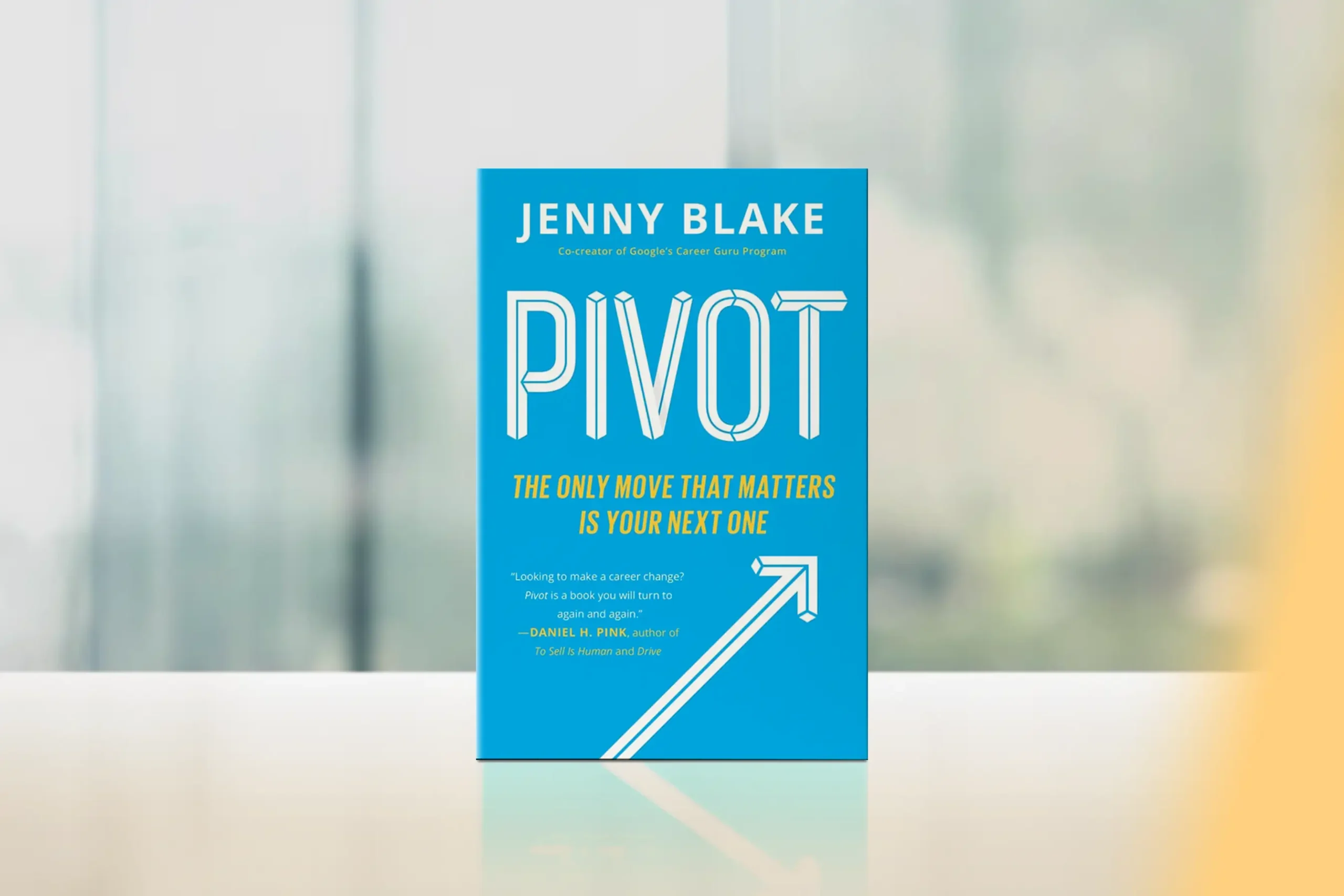
“Pivot: The Only Move That Matters Is Your Next One” by Jenny Blake
Make smart career moves by building on existing strengths.
“What Color Is Your Parachute?” by Richard N. Bolles
Identify your strengths, values, and where you will do your best work.