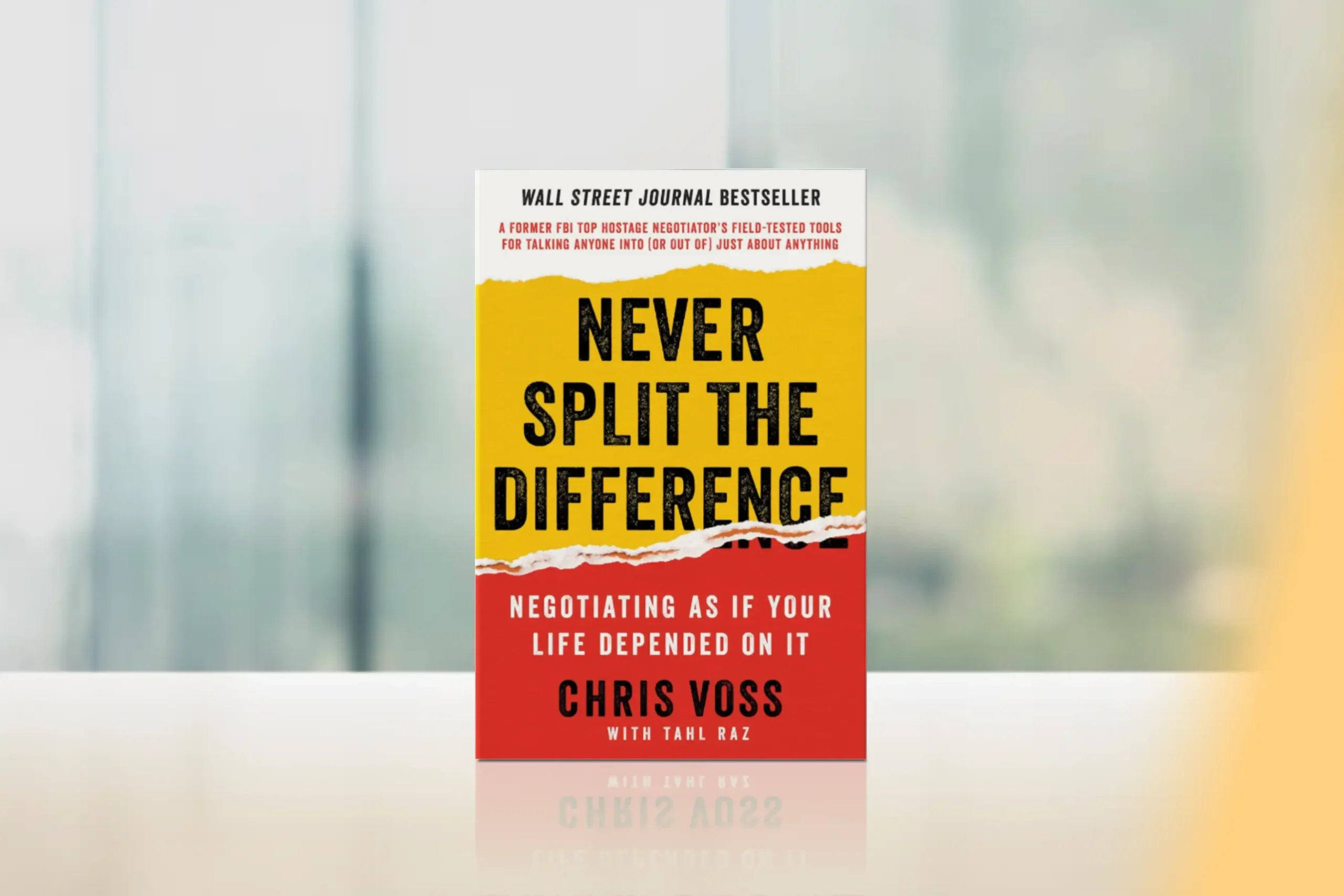
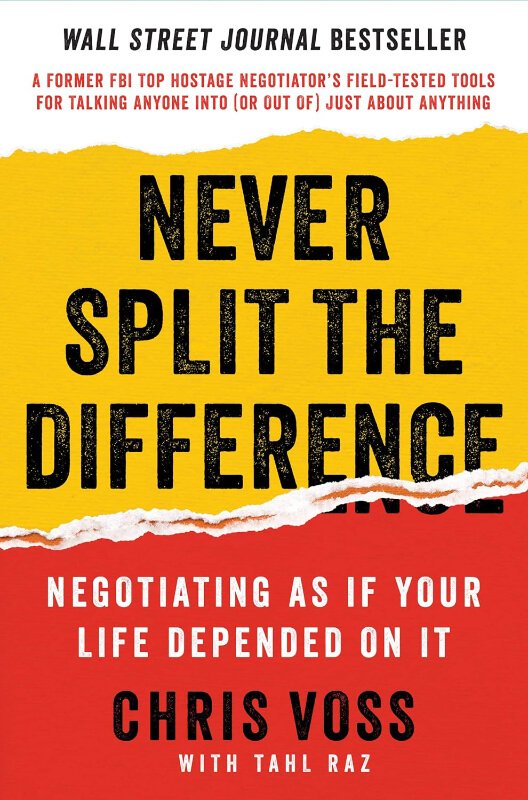
Former FBI hostage negotiator Chris Voss transforms high-stakes negotiation strategies into powerful tools for everyday life in this groundbreaking book.
Published in 2016, “Never Split the Difference” revolutionizes traditional approaches to negotiation by emphasizing emotional intelligence and psychological tactics over conventional win-win solutions.
Drawing from his experience in life-or-death negotiations, Voss presents a compelling framework that anyone can use to become more persuasive in both professional and personal situations.
Core Concepts
“Never Split the Difference” methodology centers on tactical empathy and emotional intelligence, challenging the traditional rational approach to negotiation. Voss introduces several key techniques:
- Tactical Empathy: Understanding and leveraging emotional dynamics
- Calibrated Questions: Using specific “how” and “what” questions to guide conversations
- Mirroring: Repeating the last few words spoken by your counterpart
- Labeling: Identifying and articulating emotions to create trust
- The Black Swan Rule: Finding and using unknown pieces of information that change everything
These concepts are designed to help you understand the true motivations behind any negotiation and achieve better outcomes through emotional connection rather than logical argumentation.
Chapter-by-Chapter Review
Chapter 1: The New Rules
Voss challenges traditional negotiation methods based on logic, compromise, and rational bargaining. He introduces the idea that negotiation is fundamentally emotional and explains why tactical empathy, careful listening, and understanding the other side’s perspective are more effective than simply arguing for what you want.
Chapter 2: Be a Mirror
Voss introduces mirroring: repeating the last few words, or a key phrase, your counterpart has said. Used with genuine curiosity, it encourages the other person to keep talking, reveal information, and feel understood without requiring you to reveal much yourself.
Chapter 3: Don’t Feel Their Pain, Label It
This chapter focuses on emotional labeling—identifying and acknowledging the feelings and concerns that may be influencing the other person’s behaviour. Rather than agreeing with those emotions, naming them can reduce tension and make difficult conversations easier to navigate.
Chapter 4: Beware “Yes”—Master “No”
Voss argues that getting someone to say “yes” is not always progress. People may agree simply to end a conversation or avoid pressure, whereas “no” can give them a sense of control and create the conditions for a more honest discussion.
Chapter 5: Trigger the Two Words That Transform Any Negotiation
The goal of this chapter is to reach “that’s right,” rather than simply “you’re right.” A genuine “that’s right” indicates that the other person feels accurately understood after hearing their own position reflected back to them.
Chapter 6: Bend Their Reality
Voss explores how people perceive value and fairness and how those perceptions can be influenced during a negotiation. He discusses techniques such as anchoring, loss aversion, deadlines, and framing to shape how the other side evaluates an offer.
Chapter 7: Create the Illusion of Control
Calibrated questions such as “How can we do that?” encourage the other person to think through the problem rather than simply rejecting a proposal. These questions give the counterpart a sense of control while helping uncover information, constraints, and possible solutions.
Chapter 8: Guarantee Execution
A successful negotiation does not end when both sides agree. Voss explains how to uncover hidden problems, clarify responsibilities, and make sure that what was agreed in conversation actually happens in practice.
Chapter 9: Bargain Hard
Voss applies his negotiation techniques directly to the bargaining stage, including how to handle numbers and counteroffers without becoming trapped in a simple back-and-forth over price. The aim is to stay calm, maintain leverage, and negotiate without unnecessarily damaging the relationship.
Chapter 10: Find the Black Swan
The final chapter focuses on discovering information that can completely change the negotiation. These “Black Swans” are unknown pieces of information, assumptions, or motivations that can dramatically alter the other side’s position once uncovered.
Key Strengths
- Practical, real-world examples from high-stakes FBI negotiations
- Clear, actionable techniques that can be implemented immediately
- Strong focus on emotional intelligence and psychological principles
- Excellent balance of theory and practical application
- Memorable stories that effectively illustrate key concepts
Potential Drawbacks
- Some techniques may feel manipulative without proper context
- Requires significant practice to master the skills presented
- May not fully address complex, multi-party negotiations
Who This Book Is For
- Business professionals looking to improve their negotiation skills
- Leaders and managers who want to enhance their emotional intelligence
- Sales professionals seeking to close better deals
- Anyone who wants to improve their personal and professional relationships through better communication
Final Review
“Never Split the Difference” is a transformative guide that revolutionizes our understanding of negotiation. By focusing on emotional intelligence and practical psychology, Voss provides a framework that’s both more effective and more human than traditional negotiation approaches. The book’s techniques are immediately applicable and can create significant improvements in both professional and personal interactions.
Rating: 4.7/5
This book is an essential read for anyone who wants to become more persuasive and effective in their daily interactions, offering a perfect blend of practical wisdom and psychological insight.
Alternative Books
Here are three excellent complementary reads that expand on different aspects of high-stakes negotiation strategies and influence:
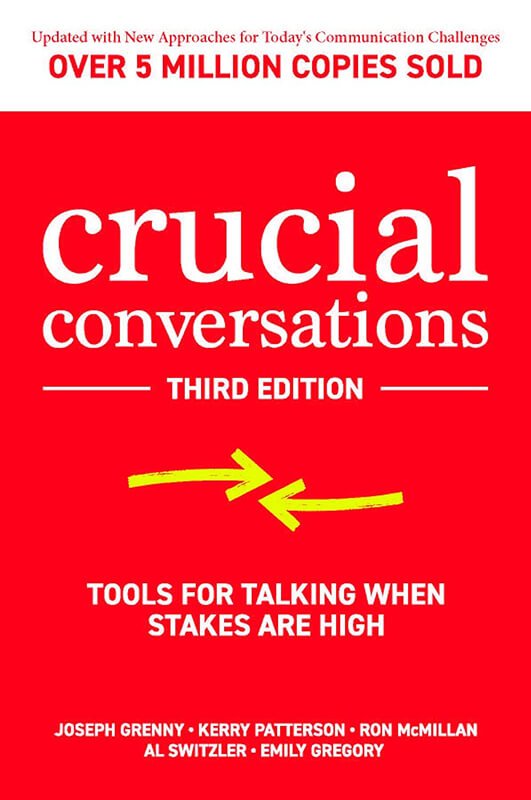
“Crucial Conversations” by Kerry Patterson et al.
A powerful guide for handling high-stakes communications and difficult conversations.
Rating: 4.6/5
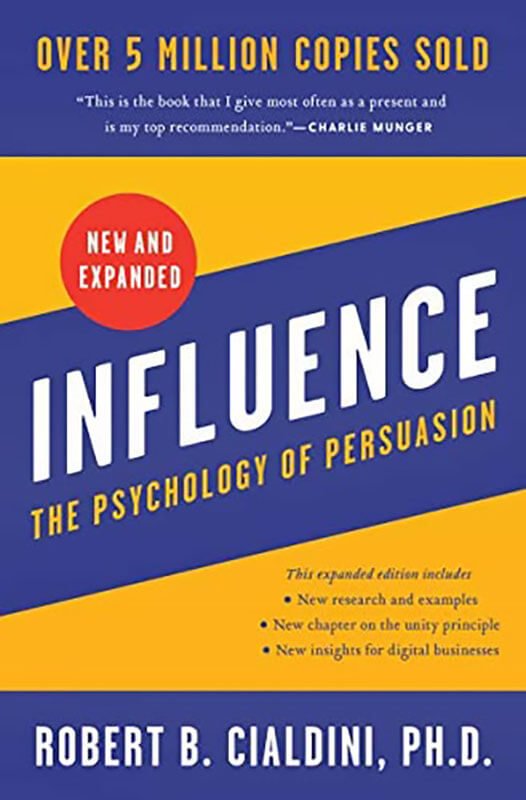
“Influence: The Psychology of Persuasion” by Robert B. Cialdini
Explores the psychology behind why people say “yes” and how to apply these principles ethically.
Rating: 4.6/5
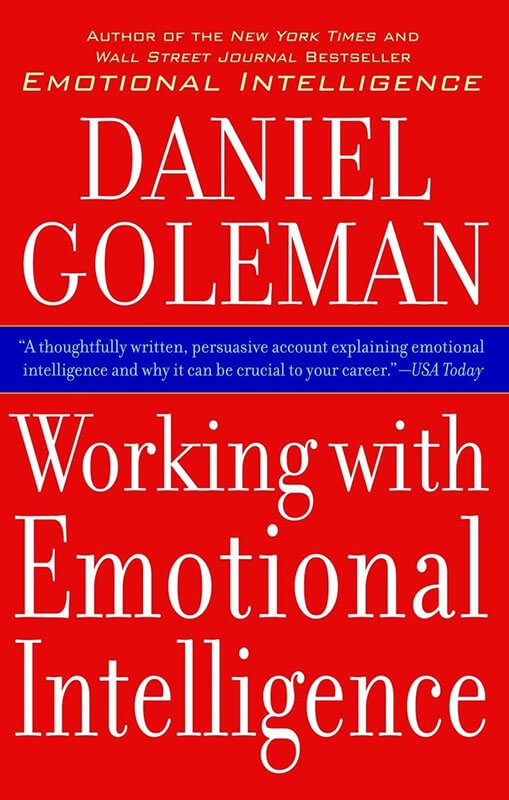
“Working with Emotional Intelligence” by Daniel Goleman
Provides deeper insight into the emotional aspects of professional relationships and communication.
Rating: 4.6/5