
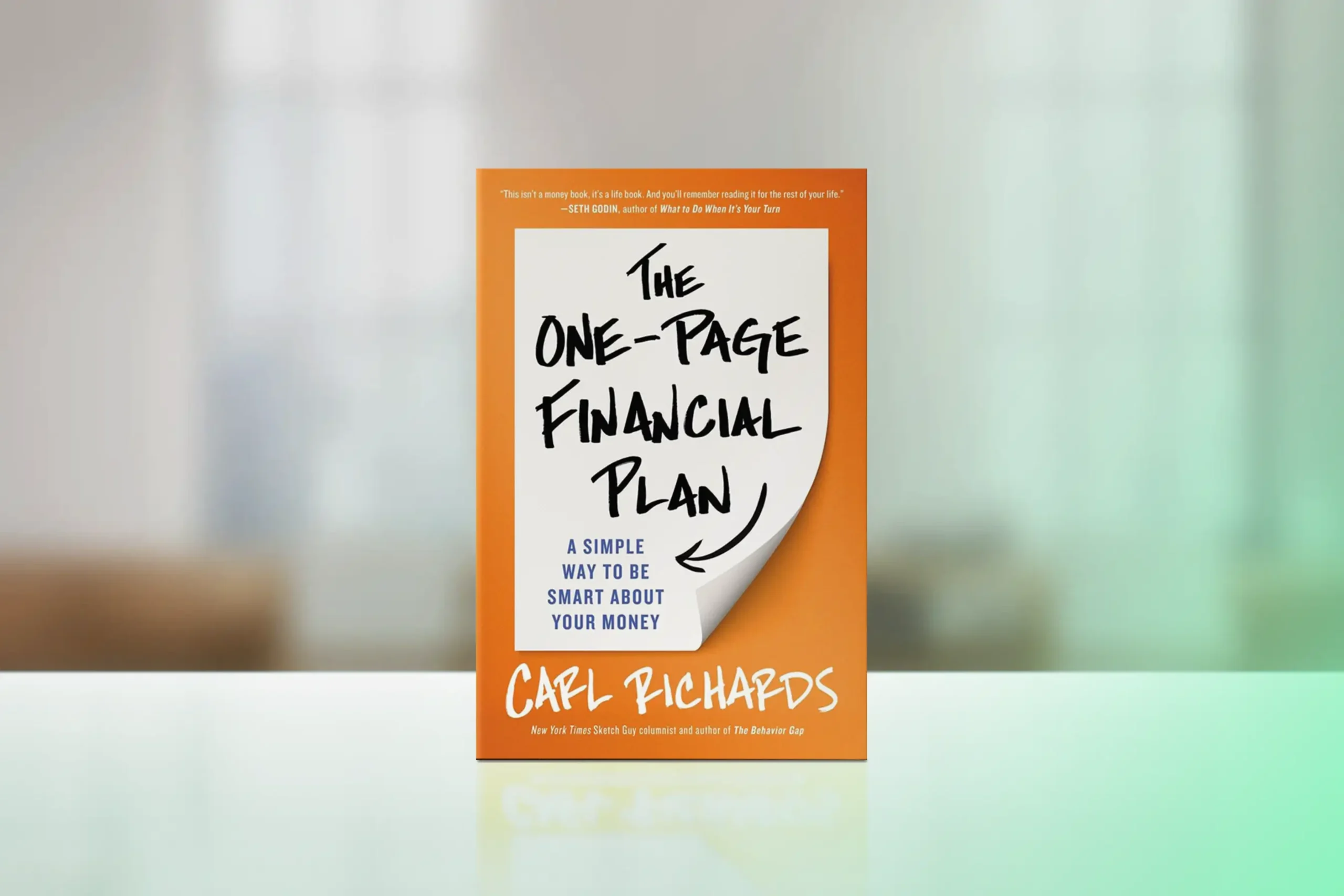
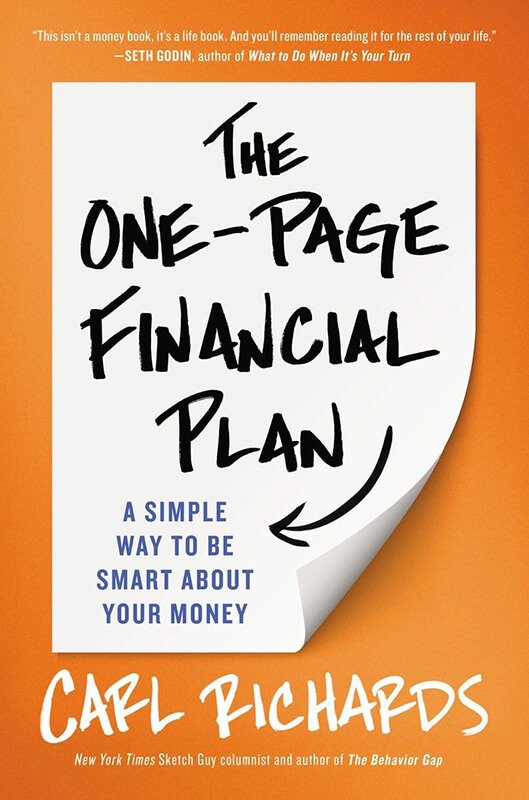
In the overwhelming world of personal finance, Carl Richards‘ “The One-Page Financial Plan: A Simple Way to Be Smart About Your Money” emerges as a breath of fresh air. Published in 2015, this insightful book cuts through the complexity of financial planning to offer a refreshingly simple approach that anyone can understand.
Richards, a Certified Financial Planner and New York Times columnist known for his simple sketches that explain complex financial concepts, with his signature style, brings clarity to the task of creating a financial plan that aligns with your values and life goals.
Core Concepts
“The One-Page Financial Plan” is built on the premise that effective financial planning doesn’t require complex spreadsheets or a deep understanding of market trends. Instead, it focuses on a few key principles:
- Identify your true values and what you really want from life
- Align your financial decisions with these values
- Focus on what you can control and ignore what you can’t
- Embrace uncertainty and be willing to adapt your plan
- Automate good financial behaviors
- Keep your financial plan simple and easy to follow
Richards makes these principles relatable by incorporating his well-known “napkin sketches” throughout the book. These simple drawings visually break down complex financial ideas, making the process less intimidating for readers. By following these principles, Richards argues that readers can create a financial plan that not only helps them achieve their goals but also brings peace of mind and reduces financial stress.
Chapter-by-Chapter Review
Chapter 1: The Most Important Money Question
Start by asking why money matters to you. Clarifying the role money should play in your life gives your financial decisions a purpose beyond simply accumulating more.
Chapter 2: Guess Where You Want to Go
Set a clear direction for your financial life without pretending you can predict the future perfectly. Your goals can change, but having a destination helps you make better decisions today.
Chapter 3: Get Really Clear About Your Current Location
Understand where you actually stand before deciding where to go. A simple view of your assets, debts, income, and spending gives you an honest starting point for building a plan.
Chapter 4: Budgeting as a Tool for Awareness
Use a budget to understand where your money is going and whether your spending reflects what matters to you. The goal is awareness and alignment, not restricting every decision.
Chapter 5: Save as Much as You Reasonably Can
Saving is one of the simplest ways to create flexibility and security. Save as much as your circumstances reasonably allow, and automate the process so it becomes a habit rather than a decision you have to make every month.
Chapter 6: Buy Just Enough Insurance—Today
Insurance is about protecting against financial risks that could seriously disrupt your plan. Focus on the coverage you genuinely need rather than treating insurance as another investment opportunity.
Chapter 7: “The Best Investment I Ever Made”: Borrowing and Spending Wisely
Debt and spending should be judged by how they affect your broader financial goals. Pay particular attention to expensive debt, avoid unnecessary borrowing, and recognise that paying down high-interest debt can be a valuable investment in your future.
Chapter 8: Invest Like a Scientist
Approach investing with evidence rather than predictions, stories, or market excitement. Keep costs low, diversify, accept uncertainty, and focus on a strategy you can stick with for the long term.
Chapter 9: Hire a “Real Financial Advisor”
A good financial advisor should understand your goals and help you make better decisions, rather than simply selling you financial products. The right advisor can also provide perspective and keep emotions from taking over when decisions become difficult.
Chapter 10: Behave, for a Really Long Time
A sound financial plan only works if you can stick with it. Build simple rules and habits that protect you from emotional decisions, especially during market volatility, and give your plan enough time to work.
Key Strengths
- Simplifies complex financial concepts into easy-to-understand principles
- Focuses on aligning financial decisions with personal values and goals
- Provides practical, actionable advice for improving financial habits
- Uses relatable examples and Richards’ signature sketches to illustrate key points
- Emphasizes the emotional and behavioral aspects of financial planning
Potential Drawbacks
- May be too basic for those seeking advanced financial strategies
- Some readers might desire more detailed, step-by-step instructions
- The one-page approach might oversimplify complex financial situations for some individuals
Who This Book Is For
“The One-Page Financial Plan” is an excellent resource for:
- Individuals intimidated by traditional financial planning approaches
- Young professionals looking to establish sound financial habits
- Anyone seeking to align their finances with their life values and goals
- Readers who appreciate simplicity and clarity in financial advice
Final Review
Carl Richards’ “The One-Page Financial Plan” offers a refreshing and accessible approach to personal finance that empowers readers to take control of their financial lives. By focusing on values-based decision-making and simplicity, Richards provides a framework that can help reduce financial stress and increase confidence in managing money.
The book’s greatest strength lies in its ability to make financial planning feel approachable and even enjoyable. Richards’ use of simple sketches and relatable examples helps demystify complex financial concepts, making them accessible to readers of all backgrounds. In particular, his ability to connect financial decisions with personal values adds a deeper sense of purpose to the planning process, showing that money management is ultimately about living a life aligned with what truly matters.
While some may find the one-page approach overly simplistic, the principles Richards outlines are sound and can be adapted to more complex situations. The emphasis on behavior and mindset in financial planning is particularly valuable, addressing a crucial aspect of financial success that many traditional resources overlook.
Rating: 4.4/5
A refreshingly simple and values-driven approach to financial planning that can help anyone build a more purposeful and less stressful relationship with money.
Alternative Books
If you are looking for other books like “The One-Page Financial Plan”, consider these alternatives:
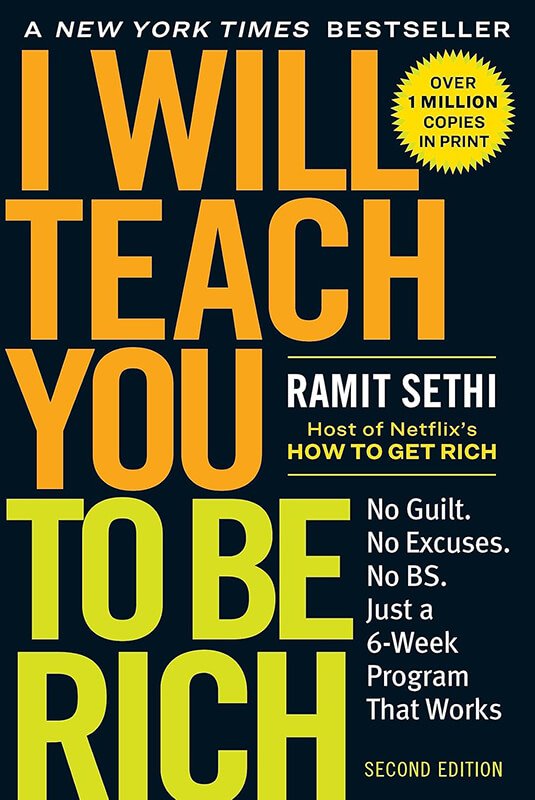
“I Will Teach You to Be Rich” by Ramit Sethi
Offers a practical, no-nonsense approach to personal finance for young adults.
Rating: 4.5/5
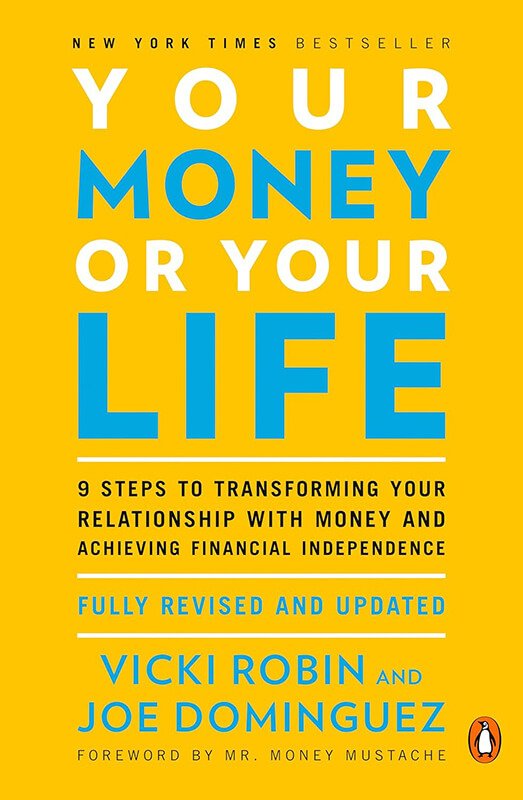
“Your Money or Your Life” by Vicki Robin and Joe Dominguez
Explores the relationship between money and life satisfaction, encouraging readers to align spending with values.
Rating: 4.5/5
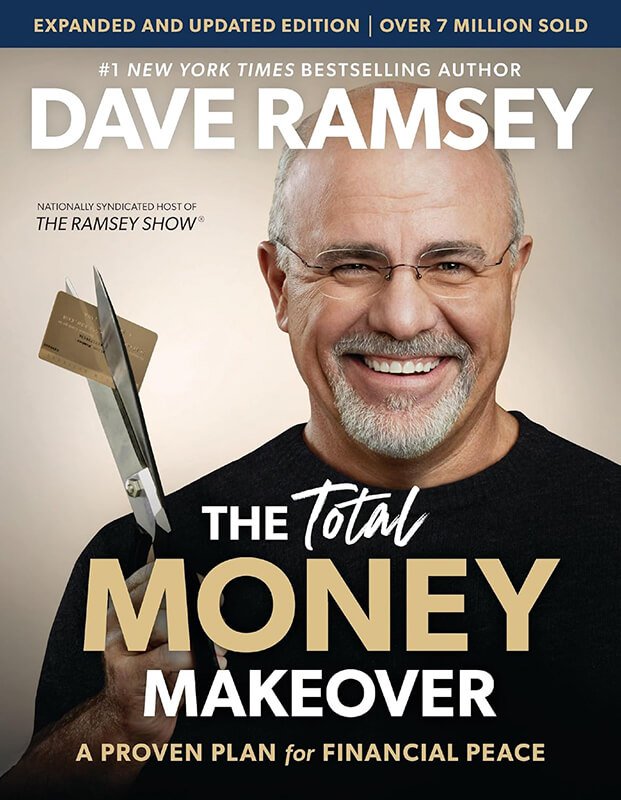
“The Total Money Makeover” by Dave Ramsey
Provides a step-by-step guide to getting out of debt and building wealth.
Rating: 4.7/5