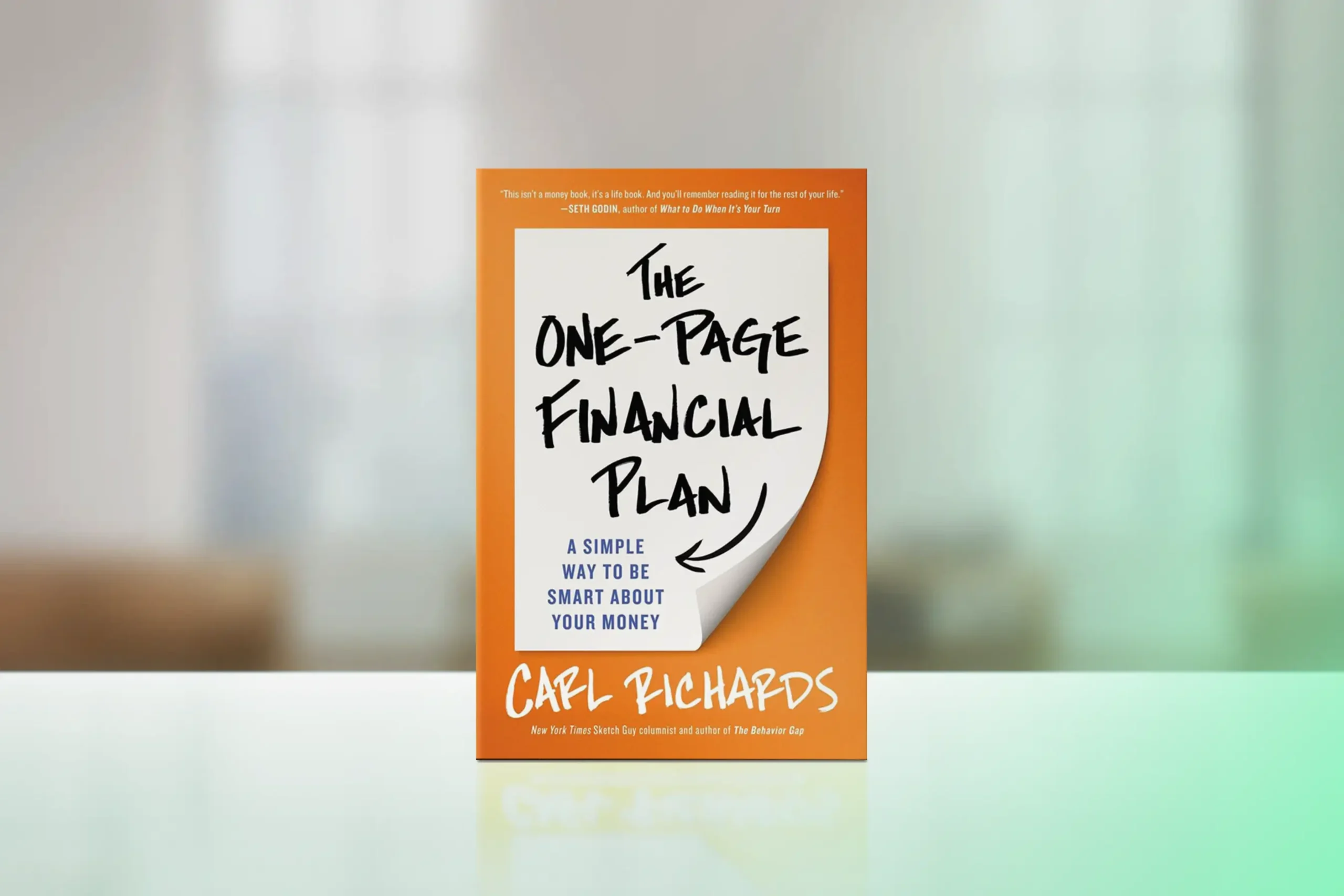

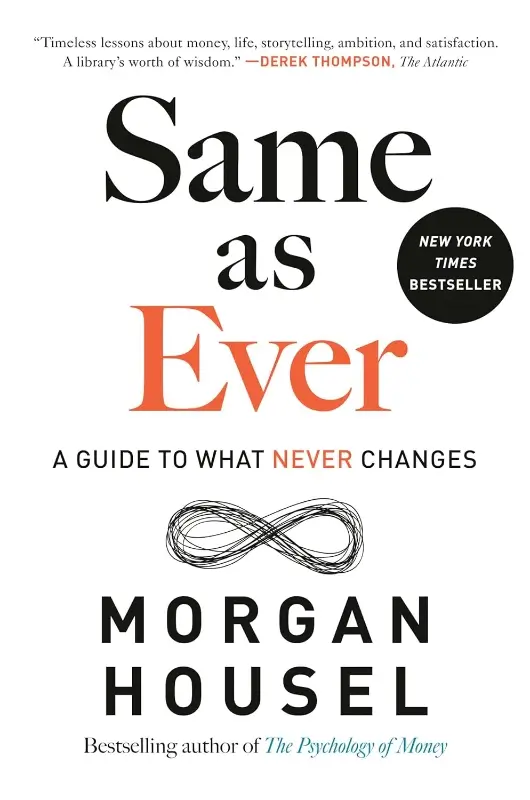
Morgan Housel‘s Same as Ever makes a simple, liberating argument: stop trying to forecast what will change and start studying the human behaviours that never do, first published in 2023.
Housel is a partner at the Collaborative Fund, a two-time winner of the Best in Business Award from the Society of American Business Editors and Writers, and the author of the six-million-selling The Psychology of Money. This follow-up landed as an instant New York Times bestseller.
Core Concepts
Same as Ever introduces several key ideas that form the foundation of Morgan Housel’s theory:
- What Never Changes: Forecasts age badly, but greed, fear, envy and overconfidence do not, so anchor your decisions to behaviour rather than prediction.
- Risk Is What You Don’t See: The damaging risks are the ones missing from your model, which is why preparedness beats precision every time.
- Happiness Equals Reality Minus Expectations: Your expectations move faster than your income, so managing them matters as much as growing what you earn.
- The Best Story Wins: People want certainty more than accuracy, and a memorable narrative will beat a better argument almost every time.
- Incentives Are the Most Powerful Force in the World: If you want to understand why intelligent people behave irrationally, look at what they are being rewarded for.
Taken together, these ideas flip the usual planning question on its head. Instead of asking what will happen next, you start asking what has always been true, then build a life, a career and a portfolio that survives whichever version of the future actually arrives.
Chapter-by-Chapter Review
Chapters 1-6: Risk, Expectations, and the Stories We Believe
- Hanging by a Thread. Much of life is shaped by events you cannot predict. Stay humble about success and build enough margin to survive when luck turns against you.
- Risk Is What You Don’t See. The greatest risks are often the ones missing from your model. Preparation matters more than prediction because you can prepare for uncertainty without knowing when it will arrive.
- Expectations and Reality. Happiness depends on the gap between reality and what you expected. If your income grows but your expectations grow just as fast, you may end up no happier.
- Wild Minds. Intelligence does not guarantee better thinking. Smart people can become better at defending their beliefs than questioning them.
- Wild Numbers. Numbers are easy to misread without a feel for scale, probability, and compounding. Data becomes useful when it is placed in context and connected to a plausible story.
- Best Story Wins. People often prefer a coherent story to a complicated truth. We naturally seek certainty and meaning, which is why the best storyteller can beat the most accurate explanation.
Chapters 7-12: Why Calm Breeds Crazy and Small Things Compound
- Does Not Compute. Human behaviour rarely follows economic logic. Fear, envy, identity, and social pressure can easily overpower the spreadsheet.
- Calm Plants the Seeds of Crazy. Stability can create complacency. When nothing goes wrong for long enough, people gradually stop believing that something could.
- Too Much, Too Soon, Too Fast. Growth can become a weakness when it outpaces the ability to adapt. Businesses, careers, and societies can break by scaling faster than they can handle.
- When the Magic Happens. Extraordinary results often come from ordinary actions repeated for a very long time. Compounding is powerful precisely because it is difficult to see while it is happening.
- Overnight Tragedies and Long-Term Miracles. Disasters arrive suddenly, while progress accumulates quietly. That asymmetry makes bad events feel more powerful and long-term progress easier to overlook.
- Tiny and Magnificent. Small actions can produce enormous results when given enough time. Compounding applies not only to money, but also to habits, skills, businesses, and relationships.
Chapters 13-18: Optimism, Difficulty, and the Lives We Envy
- Elation and Despair. Hold short-term pessimism and long-term optimism at the same time. Save like a pessimist, invest like an optimist, and learn to live comfortably between the two.
- Casualties of Perfection. Chasing the perfect strategy can stop you from acting. Slack, flexibility, and financial breathing room may look inefficient, but they help you survive unexpected shocks.
- It’s Supposed to Be Hard. Difficulty is not proof that something is failing. Uncertainty, boredom, setbacks, and delayed rewards are often simply the price of meaningful progress.
- Keep Running. No advantage lasts forever. Success attracts competition and complacency, so staying successful requires continuing to adapt.
- The Wonders of the Future. The future will likely be astonishing, but rarely in the ways we predict. Stay open to surprise rather than becoming overly confident in your forecasts.
- Harder Than It Looks and Not as Fun as It Seems. We envy other people’s lives because we see their outcomes, not their costs. We compare our full experience with someone else’s highlight reel.
Chapters 19-23: Incentives, Time Horizons, and What Experience Teaches Us
- Incentives: The Most Powerful Force in the World. Behaviour becomes easier to understand when you know what is being rewarded. Incentives can push reasonable people toward seemingly irrational or indefensible decisions.
- Now You Get It. Experience changes what knowledge means. You can understand risk intellectually and still behave differently once you have personally paid the price.
- Time Horizons. Long-term thinking is valuable but psychologically difficult because short-term setbacks still hurt. Patience means maintaining a long-term perspective while remaining flexible enough to change course.
- Trying Too Hard. Complexity can become a form of self-deception. Simple solutions may feel inadequate, but the best strategy is often the one simple enough to keep using.
- Wounds Heal, Scars Last. Most setbacks eventually become survivable memories, but major experiences can permanently change how you behave. The pain fades; the lesson remains.
Key Strengths
- Storytelling that sticks: Housel proves his own thesis by making every principle memorable through a story you will still be repeating months later.
- Ruthless brevity: At 240 pages and under six hours on audio, Same as Ever respects your time and never pads an idea to fill a chapter.
- Modular structure: Each of the 23 chapters stands alone, so you can dip in anywhere and reread the ones that matter to you.
- Range of evidence: Examples pulled from war, medicine, science and business make the patterns feel genuinely universal rather than finance-specific.
- Questions, not commandments: The closing set of self-directed questions gives you something to work with instead of a list of rules to obey.
Potential Drawbacks
- Repetition: Core ideas resurface in slightly different clothes across several chapters, and tighter editing would have sharpened the impact.
- Loose structure: Many chapters began life as Collaborative Fund blog posts, and Kirkus Reviews criticised the book’s “meandering structure and lack of focus” as a result.
- Not a manual: This is a book of principles rather than a framework. If you want a step-by-step investing system or peer-reviewed behavioural science, look elsewhere.
Who This Book Is For
This book is a valuable resource for a wide range of readers, particularly:
- Investors who want perspective and temperament rather than another set of tactics.
- Founders, planners and strategists whose work depends on forecasts they know are unreliable.
- Readers who loved The Psychology of Money and want the same voice applied beyond money.
- Anyone rebuilding after a setback and looking for a calmer way to read a noisy world.
Final Review
“Same as Ever” is not really about predicting the future. Its main idea is that while circumstances change, human behaviour tends to repeat itself. The book explores these recurring patterns through ideas about risk, incentives, expectations, uncertainty, and time.
It is not as focused as The Psychology of Money, and some ideas are repeated more than necessary. Still, the strongest chapters offer useful ways of thinking about risk, incentives, and long-term decisions. It is also an easy book to get through in an afternoon.
Rating: 4.5/5
The main takeaway is simple: the future may be unpredictable, but many of the forces shaping our decisions are remarkably familiar. Understanding those patterns can be more useful than trying to predict exactly what comes next.
Alternative Books
Here are three related books that further explore this topic:
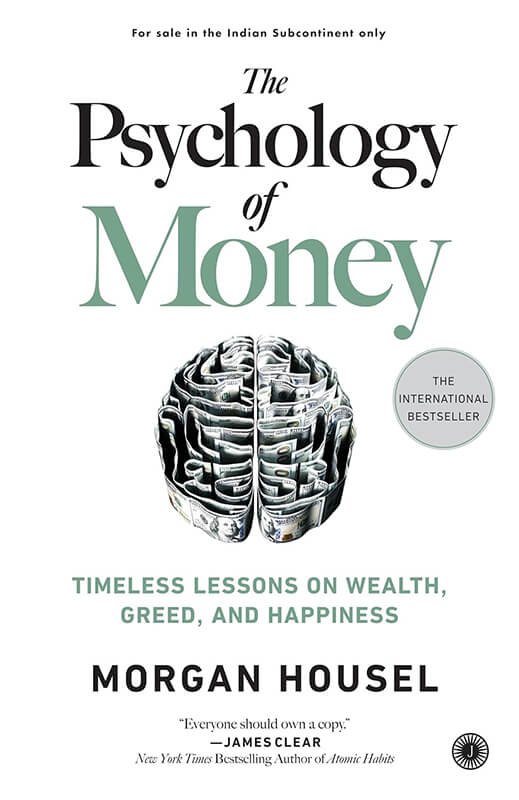
“The Psychology of Money” by Morgan Housel
Housel’s first book, and the tighter one. The same behavioural lens applied squarely to how you earn, save and invest.
Rating: 4.7/5
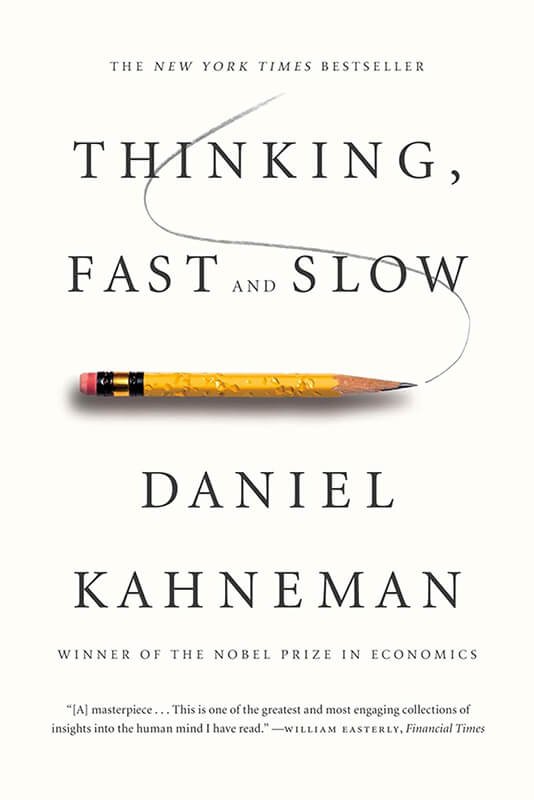
“Thinking, Fast and Slow” by Daniel Kahneman
The research foundation beneath Housel’s storytelling. Kahneman’s account of the biases that make smart people predictably irrational.
Rating: 4.6/5
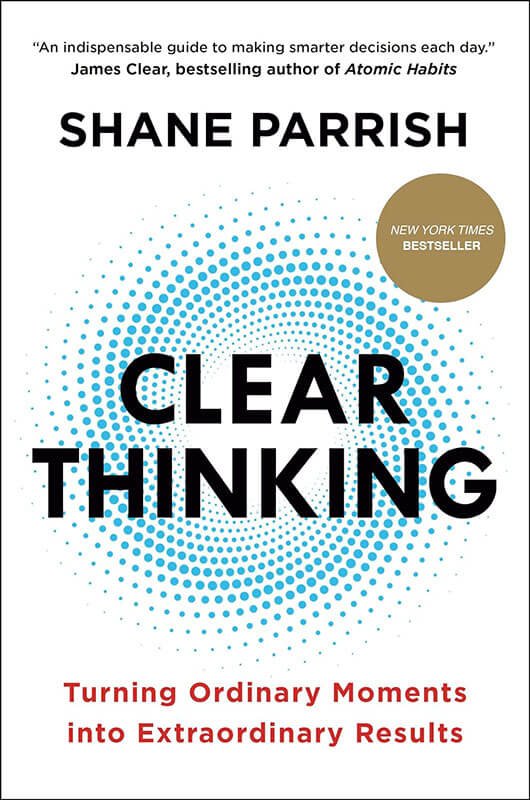
“Clear Thinking” by Shane Parrish
Parrish turns the same ideas into a practical system for making better decisions under pressure.
Rating: 4.6/5