
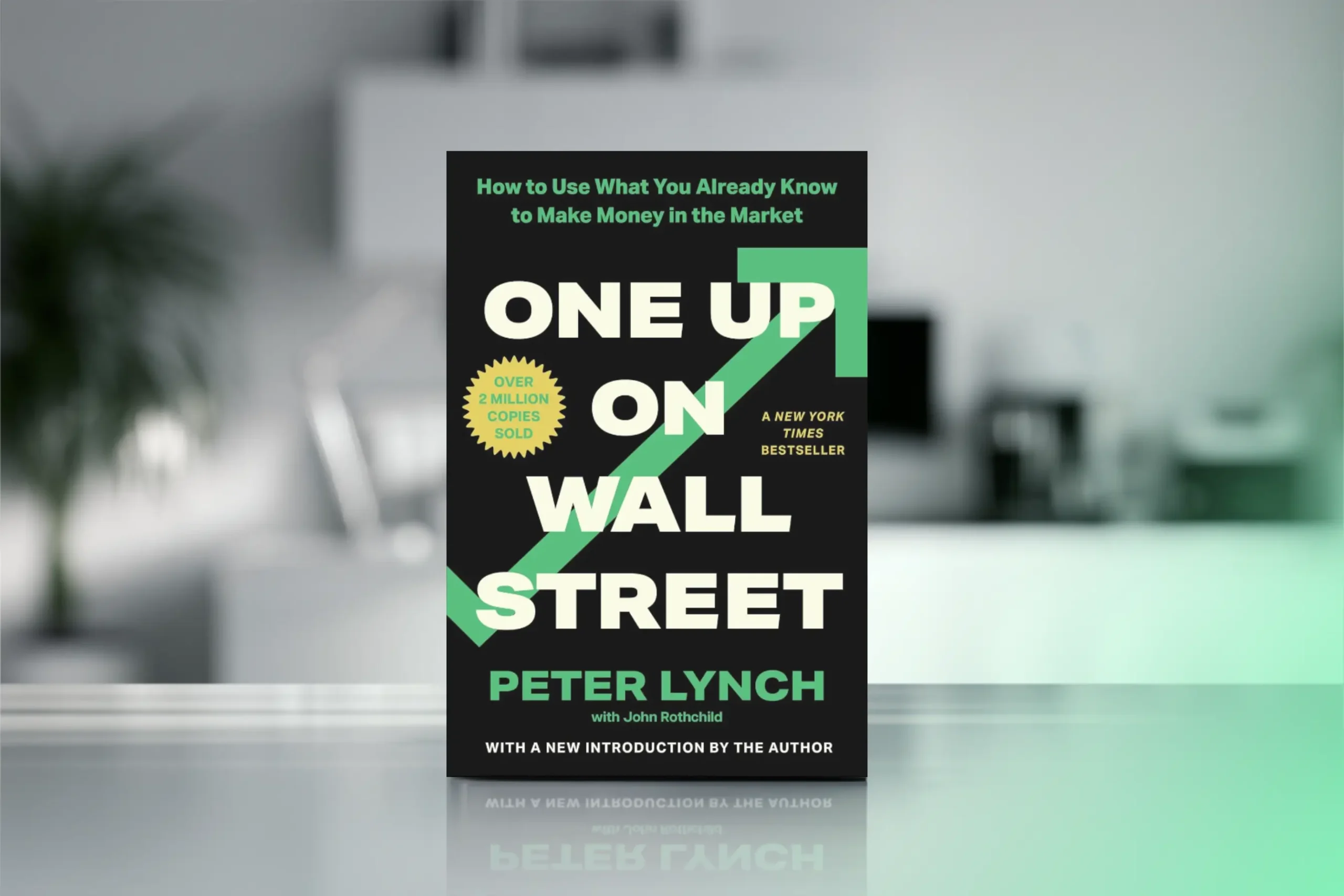
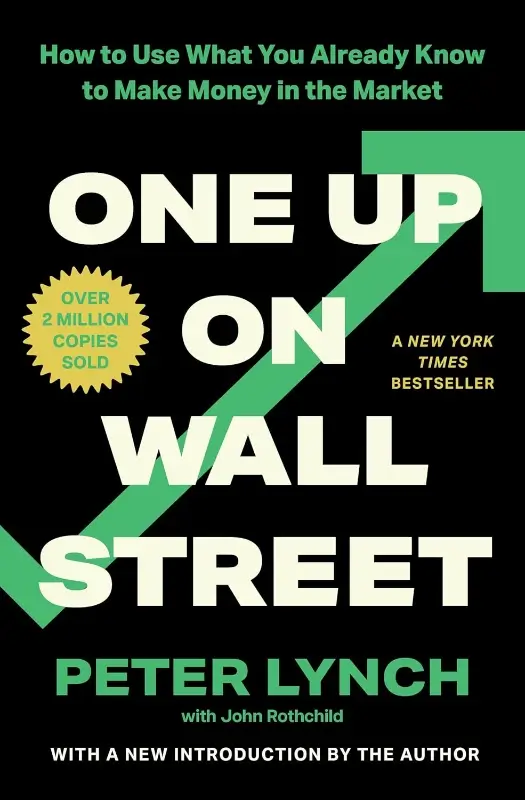
How did Peter Lynch, the legendary investor, turn everyday observations into billions? In One Up on Wall Street, Lynch reveals a practical stock-picking approach built around spotting promising businesses before Wall Street catches on.
First published in 1989, the book draws on Lynch’s remarkable Magellan Fund record. From 1977 to 1990, he achieved a 29.2% annualized return, growing the fund from about $18 million to $14 billion.
Core Concepts
The book introduces several key ideas that form the foundation of Peter Lynch’s approach:
- Invest in What You Know: Your job, your shopping habits and your hobbies put promising companies in front of you months or years before Wall Street analysts write them up.
- The Tenbagger: Lynch’s term for a stock that multiplies tenfold. A handful of them can carry an entire portfolio, so you only need to be right occasionally.
- The Six Stock Categories: Slow growers, stalwarts, fast growers, cyclicals, turnarounds and asset plays, each with its own reason to buy and its own reason to sell.
- Earnings, Earnings, Earnings: Over any meaningful stretch of time, a share price follows the earnings line. Everything else is noise you can safely ignore.
- The Two-Minute Drill: If you cannot explain in two minutes why you own a company and what has to go right, you do not understand it well enough to own it.
Notice the sequence. Lynch never asks you to buy on a hunch. Observation only generates the idea. Earnings, the balance sheet and valuation decide whether you act on it.
Chapter-by-Chapter Review
Part I, Chapters 1-5: Preparing to Invest
Lynch makes the case for the amateur. Fund managers work under constraints you do not have, which is why he calls institutional money “smart” only by convention. He then applies the mirror test: can you afford to lose this money, do you own a home first, and do you have the stomach for it? His answer to “is this a good market?” is simply, please don’t ask.
Part II, Chapters 6-15: Picking Winners
The engine room of the book. Lynch introduces the tenbagger and the six categories that stop you treating every stock the same way. He profiles the perfect company as dull, boring and ignored by institutions, then warns you off the hot stock in the hot industry. Chapters 12 to 15 show you where the facts live, which numbers matter, and how to turn it into a checklist.
Part III, Chapters 16-20: The Long-term View
The closing part is about behaviour. Lynch covers portfolio design, when to buy and when to sell, and the twelve silliest things people say about stock prices. “It can’t go any lower.” “I’ll wait until it comes back.” He warns you off options, futures and short selling, and argues that being contrarian is worthless without evidence.
Key Strengths
- A track record you can verify: 29.2% a year for thirteen years at Magellan means the advice comes from a practitioner, not a commentator.
- Genuinely readable: Lynch writes with self-deprecating humour and concrete stories rather than jargon, so the fundamentals land without a finance degree.
- A sorting system you can actually use: The six categories turn the impossible question “should I buy this?” into six answerable ones.
- Honest about behaviour: As much space goes to your temperament and your selling mistakes as to finding the winners in the first place.
- It teaches process, not tips: The two-minute drill and the final checklist are repeatable tools that keep working long after the examples have aged.
Potential Drawbacks
- Dated examples: Written in 1989 and updated in 2000, the case studies come from a pre-internet market, and Lynch concedes in the new introduction that technology largely passed him by.
- Repetitive in places: Several chapters stack another anecdote onto a point already made, which pads the middle of the book without adding much.
- The headline idea is easily misread: “Invest in what you know” generates ideas, it does not issue buy signals. A familiar brand is not automatically a good investment, and the research Lynch expects takes hours per company.
Who This Book Is For
This book is a valuable resource for a wide range of readers, particularly:
- New investors who want to understand how a business is actually valued before buying a single share
- DIY stockpickers looking for a repeatable framework instead of a stream of tips
- Index-fund investors curious about what active management really involves before deciding to skip it
- Anyone whose biggest investing problem is behavioural: panic selling, anchoring on the purchase price, or chasing whatever is hot
Final Review
“One Up on Wall Street” is still the most approachable introduction to stock analysis anyone has written, and its central discipline has aged far better than its examples: use observation to generate the idea, then use earnings and valuation to test it. Read it for the method and the psychology, not the stock picks. Pair it with a low-cost, diversified core and you get the education without betting your future on it.
Rating: 4.5/5
A classic that earns its status. Clear, honest and genuinely useful, held back only by examples that now belong to a different market.
Alternative Books
Here are three related books that further explore this topic:
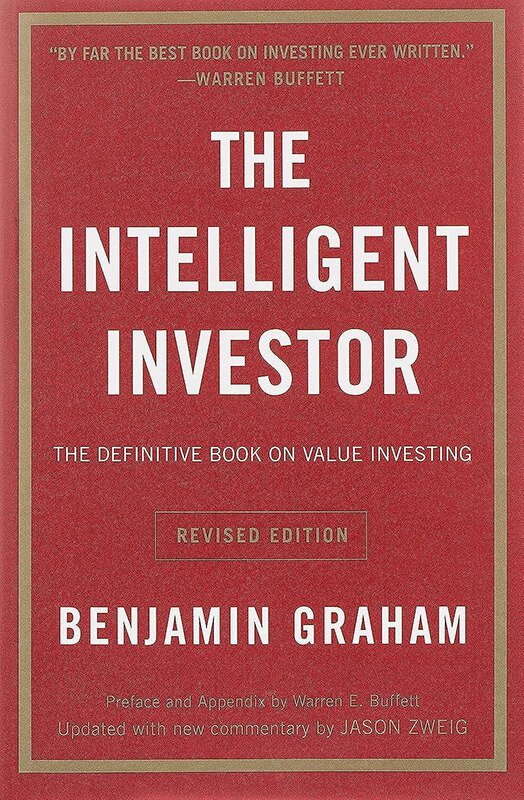
“The Intelligent Investor” by Benjamin Graham
Graham’s foundational text on value investing and the margin of safety. This is the discipline Lynch’s earnings-first approach is built on.
Rating: 4.6/5
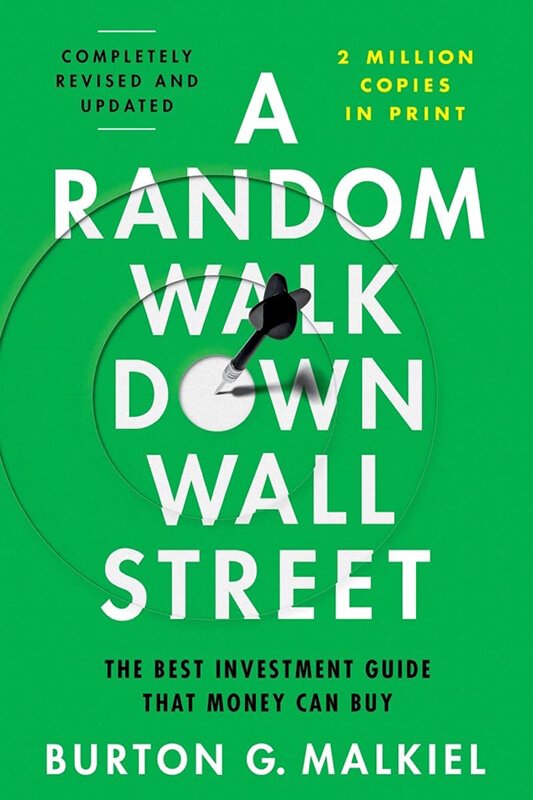
“A Random Walk Down Wall Street” by Burton Malkiel
Malkiel’s case against stockpicking altogether. Read it as the counterweight to Lynch and decide for yourself where you land.
Rating: 4.5/5
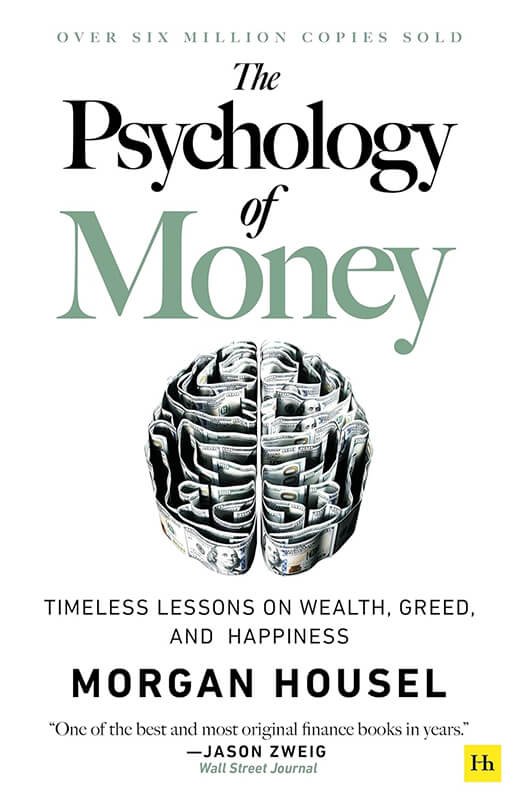
“The Psychology of Money” by Morgan Housel
Housel on why temperament beats intelligence in investing. This is the behavioural half of what Lynch is quietly teaching you.
Rating: 4.7/5