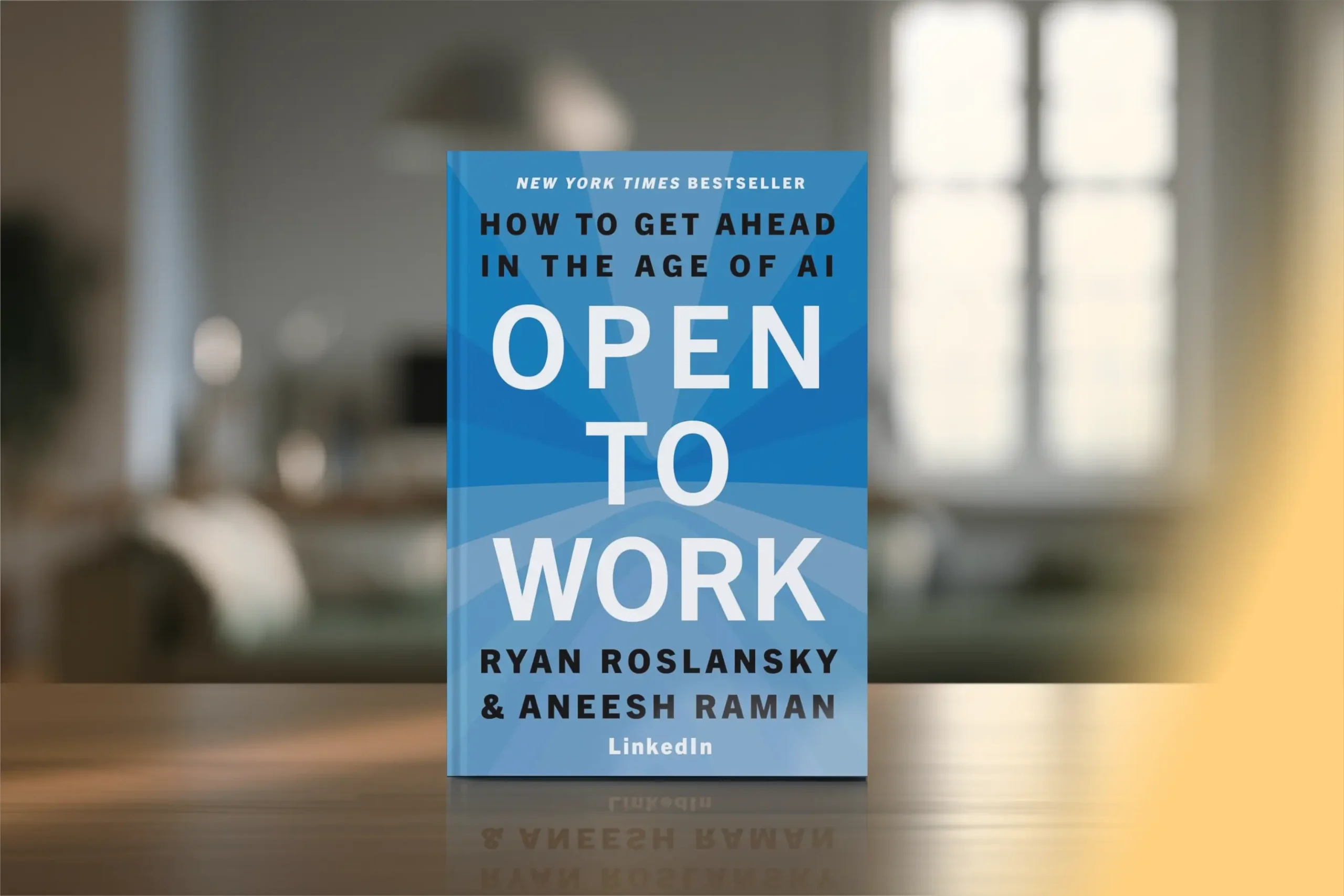
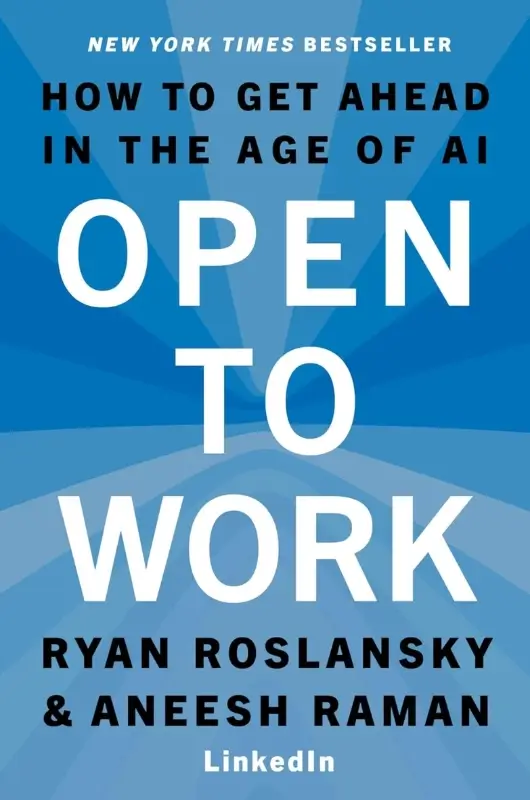
Ryan Roslansky and Aneesh Raman‘s “Open to Work: How to Get Ahead in the Age of AI” argues that the era of fixed job titles and predictable career ladders is over — and that adaptability, human skills, and a willingness to evolve are now the defining factors of professional success, first published in 2026.
The book draws on real-time data from over a billion professionals on LinkedIn to offer a data-grounded, practical guide to navigating the AI-driven transformation of work.
Core Concepts
The book introduces several key ideas that form the foundation of Roslansky and Raman’s theory:
- The Shift to a Skills Economy: Work is increasingly defined by skills and capabilities rather than job titles, requiring a more flexible approach to career development.
- Jobs as Tasks, Not Titles: Roles can be broken down into tasks that may be automated, augmented with AI, or retained as uniquely human work.
- The 5Cs — Human Skills in an AI World: As AI handles routine cognitive work, the authors identify five irreplaceable human capabilities: curiosity, courage, creativity, compassion, and communication.
- Careers as Non-Linear Paths: Career progression is increasingly shaped by lateral moves, pivots, and adaptation rather than climbing a predictable ladder.
- AI-Augmented Work: Individuals and organisations should rethink how AI is integrated into daily work — treating it as a tool to delegate to, not a force to fear.
Together, these ideas frame a decisive shift away from static career structures toward a dynamic, skills-first, and continuously evolving labour market — one you have real agency to shape.
Chapter-by-Chapter Review
Part I: The Wake-Up Call
The opening section frames AI not as a distant disruption but as an immediate reshaping of how work is structured today. It challenges the assumption that roles are stable and careers follow predictable paths, arguing that adaptability and continuous learning are now the baseline.
Rather than treating AI as pure threat, Roslansky and Raman reframe it as a decision point: what do you automate, what do you augment, and what stays irreducibly human? The 5Cs — curiosity, courage, creativity, compassion, and communication — are introduced here as the skills that will define competitive advantage going forward.
Part II: What’s Changing
The middle section gets practical. Jobs are broken into component tasks that can be automated, augmented by AI, or kept human-led — shifting the reader’s lens from job title to skill portfolio.
Career progression is reframed as non-linear and adaptive: lateral moves, pivots, and reinventions are not detours but the new normal. The authors also show how organisations themselves are becoming more fluid, with AI influencing how tasks and value are distributed across teams.
Part III: The Path Forward
The final section is where the book earns its title. It focuses on what you should actually do — how to stay visible, proactively reposition your skills, and build the human capabilities that AI cannot replicate.
As routine cognitive work becomes easier to automate, qualities like judgment, communication, and creative problem-solving become more valuable, not less.
The book closes with actionable guidance to help readers translate the career framework into reality.
Key Strengths
- Data-Informed Perspective: Backed by real-time insights from over a billion LinkedIn members, giving its claims genuine empirical weight rather than opinion-piece authority.
- The 5Cs Framework: The named, memorable framework for human skills gives readers something concrete to develop — not just a vague call to “stay adaptable.”
- Timely and Urgent: Published at a moment of peak anxiety about AI and jobs, the book speaks directly to what professionals are actually worried about right now.
- Broad Career Applicability: The framework is useful across early, mid-career, and transition stages — not limited to a specific industry or seniority level.
- Optimistic Without Being Naive: Rather than fear-mongering or offering empty reassurance, the authors present a constructive, action-oriented path through real change.
Potential Drawbacks
- Platform-Centric Lens: Many insights are shaped by LinkedIn’s ecosystem and may feel less directly applicable to trades, hands-on professions, or non-digital career paths.
- Variable Practical Depth: Some frameworks stay at the conceptual level — readers looking for granular, step-by-step implementation may need to supplement with other resources.
- Knowledge-Work Bias: The book is most relevant to office-based, corporate, and digital careers; its prescriptions don’t map as cleanly onto manual or creative industries.
Who This Book Is For
This book is a valuable resource for a wide range of readers, particularly:
- Professionals worried about how AI is changing their careers
- Graduates and early-career workers entering a changing job market
- Mid-career professionals looking to pivot or upskill
- HR and talent leaders focused on hiring and workforce planning in the AI era
Final Review
“Open to Work: How to Get Ahead in the Age of AI” is one of the most timely and data-grounded career guides to emerge in the AI era. Roslansky and Raman’s central argument — that adaptability and the 5Cs matter more than any job title — is backed by genuine platform-scale research, making it feel authoritative rather than advisory. If you work in a knowledge-based field and want a clear-eyed framework for navigating AI-driven change, this book delivers exactly that.
Rating: 4.5/5
A practical, data-driven career guide that replaces outdated ladder thinking with an actionable AI-era framework.
Alternative Books
Here are three related books that further explore this topic:
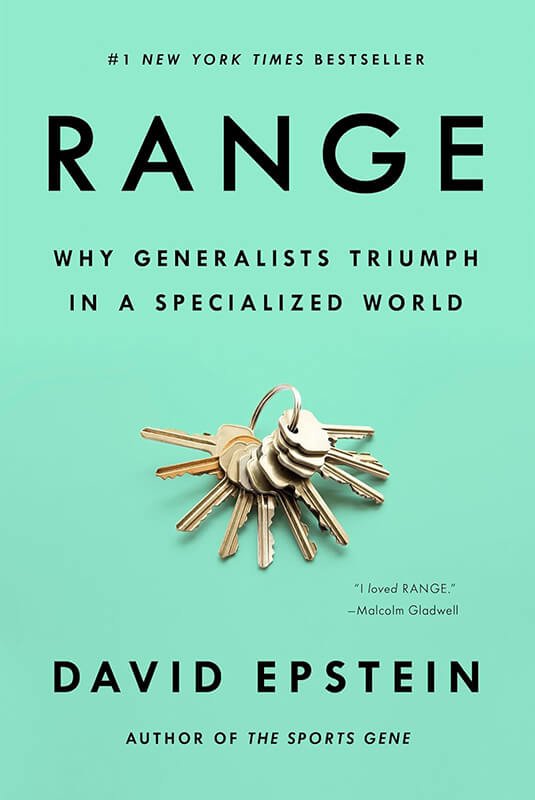
“Range: Why Generalists Triumph in a Specialized World” by David Epstein
David Epstein makes the case that breadth of skills and experience beats narrow specialisation — a perfect complement to Open to Work’s argument for adaptability over fixed expertise.
Rating: 4.6/5
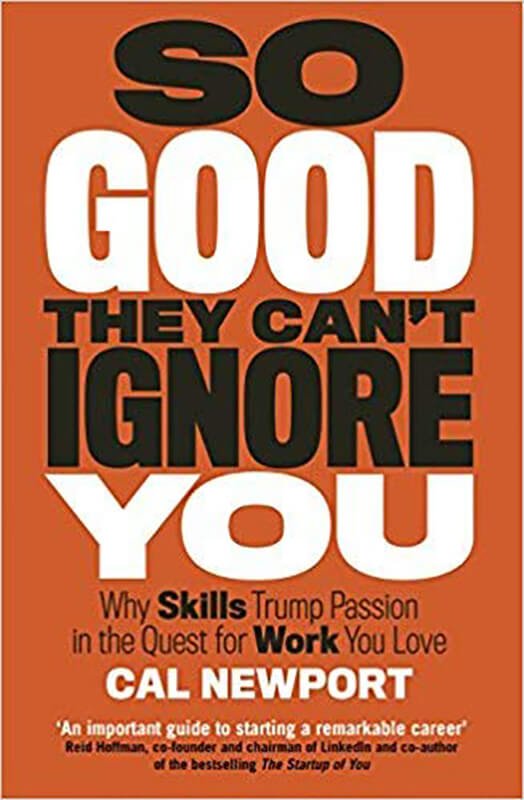
“So Good They Can’t Ignore You” by Cal Newport
Cal Newport argues that rare and valuable skills — not pre-existing passion — are the foundation of a fulfilling career, offering a complementary perspective on what it takes to thrive in a competitive labour market.
Rating: 4.5/5
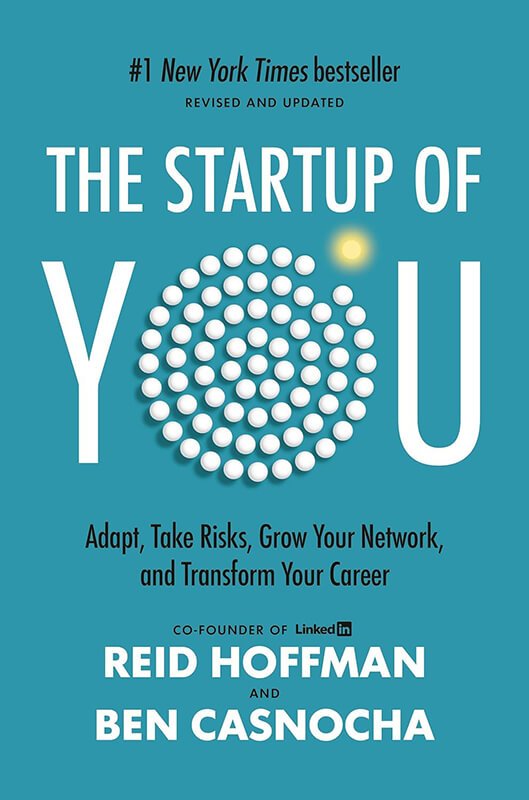
“The Start-Up of You” by Reid Hoffman and Ben Casnocha
Reid Hoffman and Ben Casnocha apply startup thinking to career development — treating your professional life as a product to iterate, pivot, and position in a fast-changing market.
Rating: 4.4/5