
Most people feel a gap between who they are and the life they are living. That gap shows up most clearly in their career and relationships. Closing it is not about finding the perfect job or the perfect people. Learning how to align your purpose with your career and relationships starts with understanding what your purpose actually is, then making choices that bring the rest of your life into line with it.
Inside this article:
TL;DR
- Purpose alignment is an ongoing practice, not a one-time decision.
- Career and relationships have the greatest impact on life satisfaction.
- Job crafting helps you improve your role without changing careers.
- Choose relationships that support your purpose.
- Doubt and resistance are a normal part of meaningful change.
1. Why Alignment Matters
Living out of alignment with your purpose is deeply draining. It is not about working hard. It is about working toward a life that doesn’t feel like your own.
Research shows that aligning your values with your work and relationships leads to greater well-being, stronger engagement, and more lasting satisfaction. Relationships built on shared values and authenticity are also more meaningful and resilient.
What Alignment Actually Means
Alignment is not about a perfect job and relationships. It is about whether your time reflects what matters most to you. The goal is to identify where you’re out of alignment and make intentional changes.
The two areas where misalignment causes the most damage are also the two that take up the most of your life: your career and your relationships. Both are worth examining honestly.
The Signs of Misalignment
- A persistent sense that your skills and energy are being used for the wrong things
- Feeling that you are performing a version of yourself rather than being it
- Work that pays the bills but drains rather than energises
- Relationships that require you to shrink, hide, or compromise your values to maintain them
For a deeper look at what the research says about purpose and its effects on wellbeing and performance, read The Science of Purpose: How It Fuels Human Flourishing.
Key Takeaway: Alignment between your purpose and your daily life is not a luxury. It is a measurable driver of engagement, health, and meaning, and it is something you can actively build.

2. Clarify Your Purpose
You cannot align your life with your purpose if you are not clear on what that purpose is. This is where most people stall. Not from a lack of motivation, but from trying to live purposefully without ever having defined what purpose actually means for them specifically.
Finding your purpose is personal work. Others can inspire you, but your purpose is shaped by your values, strengths, and the contribution that matters most to you.
Questions That Reveal It
- What activities make you feel most alive, where effort feels natural and time disappears?
- How do you most want to contribute to the people around you and beyond?
- What values, if compromised, leave you feeling hollow or resentful?
- At the end of your life, what would you want to have made possible?
Write a Working Purpose Statement
Try drafting a single sentence:
“To use [your strengths] to [your contribution] for [the people or cause it serves].”
This does not need to be perfect. It needs to be honest and specific enough to guide real decisions. Revisit it regularly, because purpose evolves across a lifetime. What matters at 30 will look different at 50, and that is not a failure of consistency. It is growth.
For structured exercises to help you identify your purpose with greater precision, read Finding Your “Why”: Exercises to Uncover Your Life Purpose.
Key Takeaway: A working purpose statement, even an imperfect one, is more useful than a vague sense of direction. Start with something honest and let it sharpen over time.
3. Align Your Career
With a working sense of your purpose, you can start honestly evaluating where your career sits relative to it. Choosing to align purpose with career does not require immediate dramatic action. It requires honest assessment first.
Four Questions to Audit Your Career Alignment
- Does my work allow me to express what I value most?
- Am I using my strongest capabilities in a meaningful way?
- Does this work energise me more often than it depletes me?
- Am I proud of the contribution I am making?
If you answer no to any of these, there is misalignment worth addressing. It will show up as feeling stuck, undervalued, or persistently bored, not because you lack ambition, but because you are putting effort into a direction that does not fit who you are.
Two Paths Forward
You essentially have two options: reshape your current role, or change direction. Both are valid depending on your situation and how deep the misalignment runs. A role that is 60% aligned and improvable is worth crafting. A role that fundamentally conflicts with your values is not.
Start by assessing honestly which situation you are in before committing to either path.
For a practical framework to assess and improve career alignment, read How to Align Your Career and Professional Life with Your Purpose.
Key Takeaway: Career alignment is not a single event. It is an ongoing assessment of whether the work you are doing still reflects the contribution you want to make.

4. Job Craft Your Role
Most roles have significantly more flexibility than people assume. Job crafting, the practice of deliberately reshaping how you approach, frame, and execute your work, is one of the most evidence-backed routes to meaningful work without requiring a career change.
Research by Amy Wrzesniewski shows that professionals who actively craft their roles around their strengths and values report higher satisfaction, better performance, and greater resilience than those who treat their job description as fixed.
Three ways to craft your role:
- Task crafting: Focus more on work that uses your strengths and less on work that drains you.
- Relationship crafting: Build stronger connections with colleagues who share your values and energize.
- Cognitive crafting: Reframe your role by focusing on the impact your work has on others.
When Crafting Is Not Enough
If you have genuinely explored what is possible within your current role and the misalignment remains fundamental, particularly around values, it may be time to consider a larger transition. That decision is best made after exhausting adjustment options, not as an impulse response to a difficult week.
For a full guide to integrating purpose into your day-to-day professional life, read Integrating Purpose into Your Professional Life.
Key Takeaway: Job crafting is not about pretending a bad role is good. It is about actively extracting more of what matters from whatever role you are in.
5. Build Purpose-Driven Relationships
The people you spend the most time with shape your sense of possibility, your standards, and your sense of self. Relationships that consistently undermine your values or require you to shrink do not just feel bad, they actively erode your ability to live purposefully.
Purpose-driven relationships do not require people who think exactly like you. They require you to be intentional about who you let into your inner circle and the influence they have.
Assess Your Relationship Landscape
| Relationship Type | What to Look For | Action if Misaligned |
|---|---|---|
| Close friends | Do they know your purpose and support it? | Have honest conversations about your evolving priorities |
| Partner / family | Is there space to be fully yourself? | Name what you need; renegotiate dynamics where possible |
| Professional network | Do these connections energise or deplete? | Invest selectively; reduce time with draining connections |
| Mentors / guides | Do they reflect the values you want to grow into? | Seek people whose lives reflect what you are building toward |
Quality consistently outweighs quantity here. One relationship where you can be fully yourself is worth more than ten where you are performing a palatable version.
For a deeper look at how purposeful connections amplify personal meaning, read The Power of Purpose and Meaningful Relationships.
Key Takeaway: The people you invest in most will either reinforce your sense of purpose or pull you away from it. Purpose and relationships deserve as much deliberate attention as your career.

6. Deepen Your Connections
Building purpose-driven relationships is not just about choosing the right people. It is also about showing up more authentically in the relationships you already have. Meaningful connection comes from depth, not simply knowing more people.
What deepening connections actually requires:
- Vulnerability: Share what truly matters, not just what feels safe.
- Curiosity: Take a genuine interest in the other person’s values and goals.
- Consistency: Build trust by showing up regularly over time.
- Reciprocity: Healthy relationships involve balanced give and take.
Embody Your Purpose in Your Relationships
One of the most powerful ways to attract and sustain meaningful connections is to live your values visibly. How you treat people in ordinary moments, how you listen, how you follow through, how you show up when it is inconvenient, communicates more about your character than any purpose statement. People who share your values will recognise that and be drawn to it.
For an exploration of how values and purpose form the foundation of meaningful relationships, read The Connection Between Purpose and Personal Values.
Key Takeaway: Depth of connection requires vulnerability, consistency, and genuine reciprocity. It is built through many small honest moments, not through grand gestures.
7. Navigate Resistance and Doubt
Living with purpose often means going against the grain. Other people’s expectations for your career, your relationships, and your choices do not always match your own values. That friction is not a sign you are doing something wrong. It is almost always a sign you are doing something real.
Common Forms of Resistance
- External pressure: Family, colleagues, or peers who interpret your choices through their own frameworks and find them puzzling or threatening
- Internal doubt: The voice that asks whether you are being impractical, selfish, or naive for prioritising meaning over security
- Comparison: Measuring your purposeful life against others’ visible achievements and finding yours lacking by conventional metrics
- Plateaus: Stretches where nothing dramatic is happening and the sense of purpose feels distant rather than immediate
How to Hold Steady
The most reliable anchor through resistance is a clearly articulated purpose that you return to regularly, not as a motivational phrase, but as a genuine north star for decisions. When doubt surfaces, the question is not “am I doing enough?” but “am I still aligned with what matters to me?”
Seek out people who have navigated similar choices. Their existence is evidence that the path is real. And distinguish between doubt that is useful, pointing to something that needs to change, and doubt that is simply the discomfort of choosing differently.
For strategies on managing the doubt that comes with living purposefully, read Overcoming Imposter Syndrome in Pursuing Your Purpose.
Key Takeaway: Resistance is not evidence that you are wrong. It is a normal cost of choosing an authentic direction over a default one. Clarity on your purpose is the most reliable way through it.

8. Live the Journey Daily
Aligning your life with your purpose is a practice, not a project. There is no point at which you arrive and stop assessing. Purpose deepens and shifts across a lifetime. What it asks of you at 25 is different from what it asks at 45. Treating career and life alignment as an ongoing practice rather than a one-time achievement is what keeps it real.
Your Monthly Purpose Audit
Build a simple check-in into your routine. Monthly is often enough. Use these four questions:
- Is how I am spending my time reflecting what I care about most?
- Where am I drifting from integrity with my values, in work, in relationships, in how I show up?
- What is being asked of me at this particular stage of my life?
- What support, inspiration, or honest feedback do I need right now?
The Long View
The people who live most purposefully are not those who never drift or doubt. They are those who keep returning: to their values, to their commitments, to the honest question of whether their outer life still reflects their inner one.
As Howard Thurman wrote: “Don’t ask what the world needs. Ask what makes you come alive and go do it. Because what the world needs is people who have come alive.” Your purpose is your particular way of coming alive. The work is staying honest about whether you are living it.
For a structured set of questions to reconnect with and refine your sense of purpose, read The Purpose Audit: 30 Questions to Uncover Your Why.
Key Takeaway: Purpose alignment is a lifelong practice of returning honestly to what matters. The goal is not perfection. It is consistent re-orientation toward what is genuinely yours.
Make a Start Today
Aligning your purpose with your career and relationships doesn’t happen through one big decision. It happens through small, honest choices made consistently over time. Start by getting clear on what matters most. Then take one meaningful step in that direction.
Next Steps
- Write your purpose statement using the questions in Section 2.
- Review your career and choose one change to make this month.
- Find one way to improve your current role without changing careers.
- Reflect on one important relationship and decide if anything needs to change.
- Schedule a monthly purpose audit.
Ask yourself: what is most out of alignment, your career or your relationships? What is one step you can take this week?
Frequently Asked Questions
How do I know if my career is aligned with my purpose?
The clearest signal is whether your work energises or depletes you over time, not just on difficult days, but as a consistent pattern. If you regularly feel that your skills and values are being used for the wrong things, or that you are performing a version of yourself rather than being it, those are reliable signs of misalignment. The four-question audit in Section 3 gives you a more structured way to assess where you stand.
Do I need to change careers to align with my purpose?
Not necessarily, and often the answer is no, at least initially. Job crafting, as described in Section 4, allows you to reshape your responsibilities, relationships, and framing within your current role. Research shows this can significantly improve meaning without a role change. A career change becomes worth considering when crafting has been genuinely explored and the core misalignment remains, particularly around values.
What if my relationships do not support my purpose?
This is one of the more difficult realities of living purposefully, and it requires honesty rather than avoidance. Some relationships can be renegotiated through direct conversation about your evolving priorities. Others may need boundaries reset. And some connections, particularly those that consistently require you to compromise your values, may need to be released. Quality of connection matters more than maintaining every existing relationship at the same level of closeness.
How often should I reassess my purpose?
A meaningful check-in every six months is usually enough for most people. More frequent assessment risks turning purpose into anxiety rather than direction. The monthly purpose audit in Section 8 is a lighter version designed to catch drift early. It takes 15 minutes and asks four specific questions rather than requiring a full reassessment. Purpose itself typically needs deeper review at major life transitions: a new role, a significant relationship change, a decade milestone.
Is it too late to align my life with my purpose?
No, and the research on purpose is particularly encouraging here. Studies show that people who find or clarify their purpose later in life experience the same benefits as those who found it early: higher engagement, better health outcomes, greater life satisfaction. The path to alignment looks different at 50 than at 25, but it is equally available. The only requirement is honesty about where you are and willingness to act on what you find.
Related articles
Integrating Purpose into Your Professional Life
How to bring meaning into your daily work without a career overhaul.
Finding Your “Why”: Exercises to Uncover Your Life Purpose
Structured exercises to identify your purpose with precision.
The Connection Between Purpose and Personal Values
Why values are the foundation of lasting purpose alignment.
The Power of Purpose and Meaningful Relationships
How purposeful connections amplify your sense of meaning.
How to Align Your Career and Professional Life with Your Purpose
A practical framework for reshaping your career around what matters most.
Further reading
“Man’s Search for Meaning” by Viktor E. Frankl
The foundational text on purpose, meaning, and human flourishing.
“Start with Why” by Simon Sinek
How clarity on your why transforms how you lead and live.
“Designing Your Life” by Bill Burnett and Dave Evans
Design thinking applied to building a life aligned with your values.
“The Element” by Ken Robinson
How finding where your talents and passions meet changes everything.
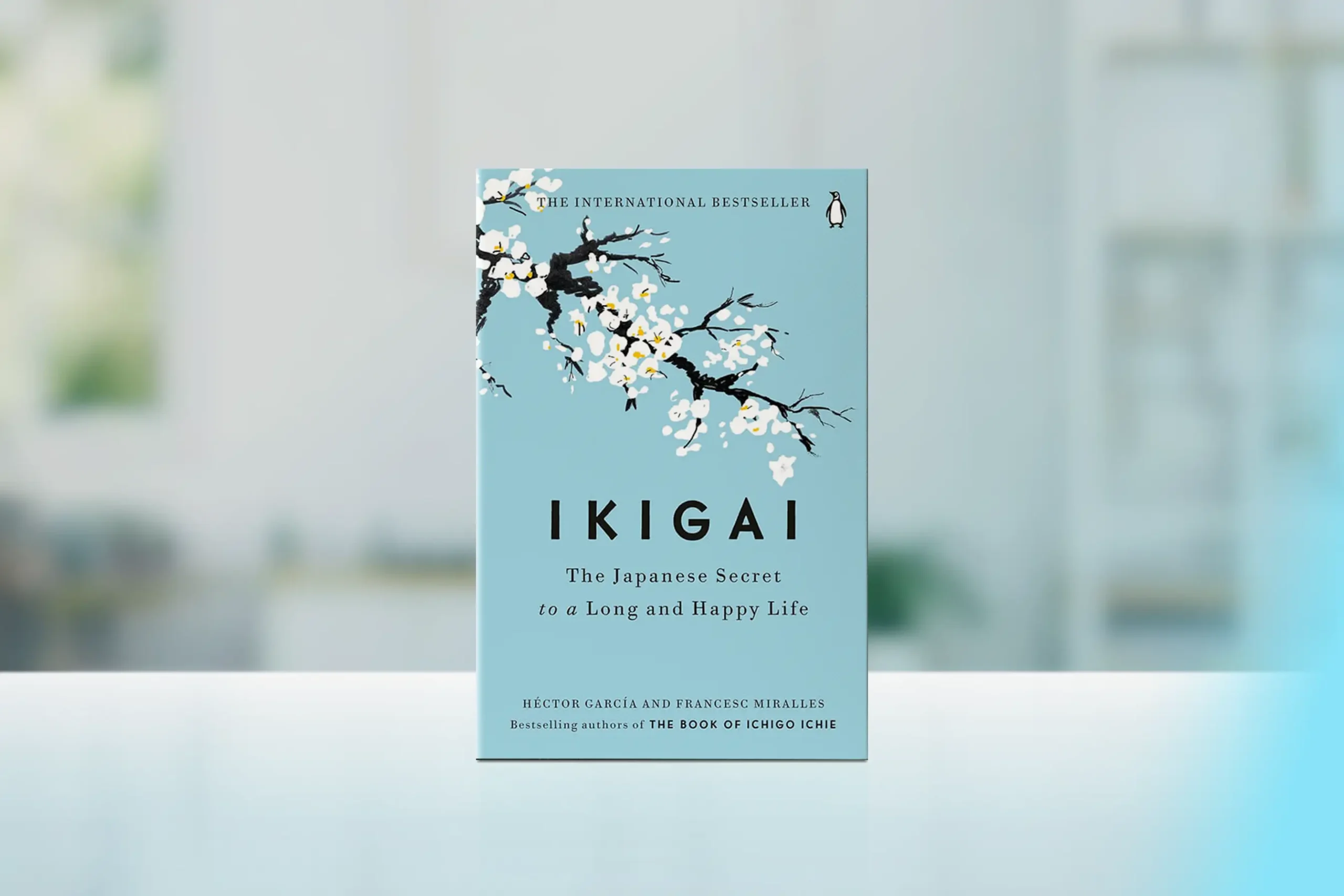
“Ikigai” by Hector Garcia and Francesc Miralles
The Japanese concept of a life’s purpose, and how to find yours.