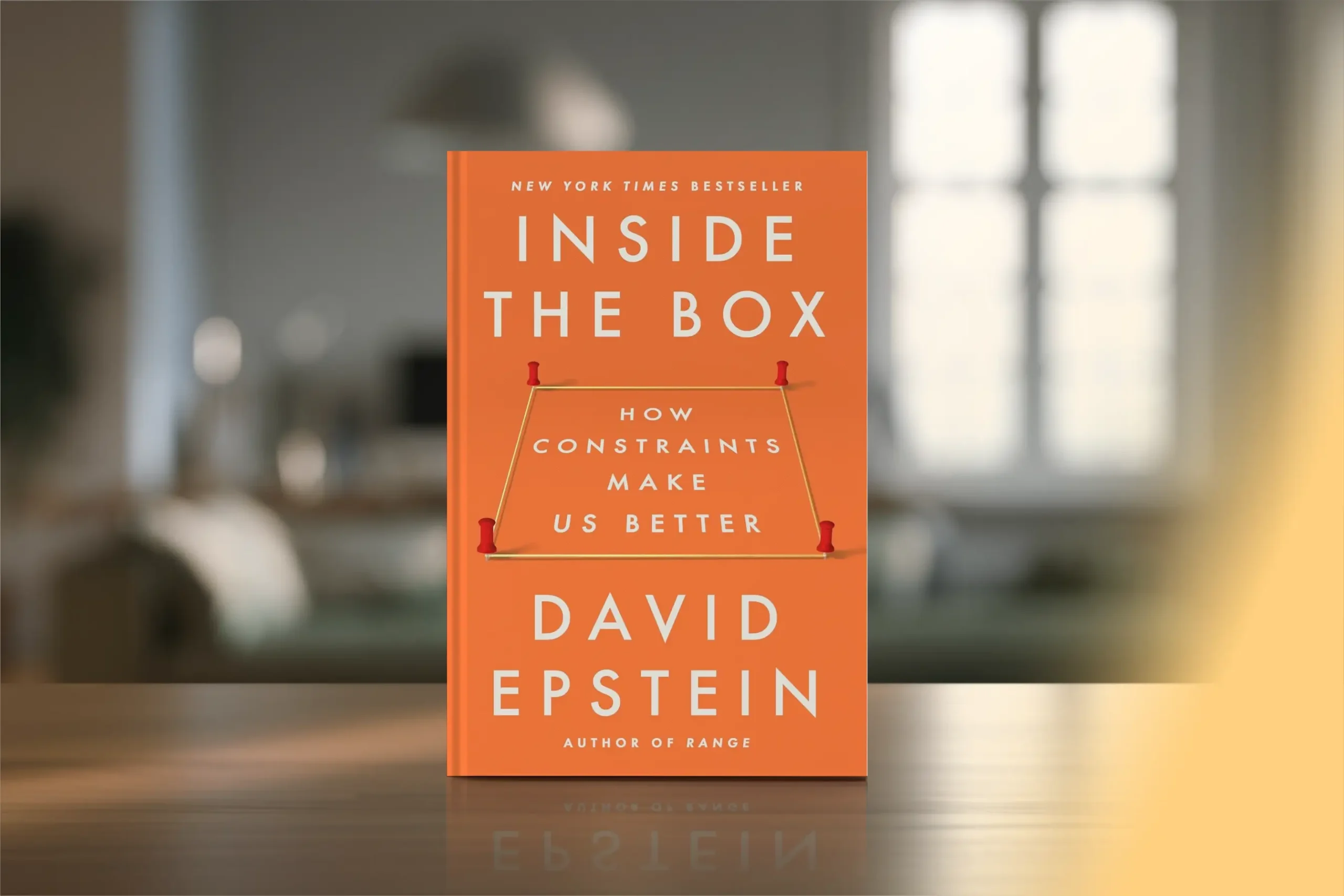
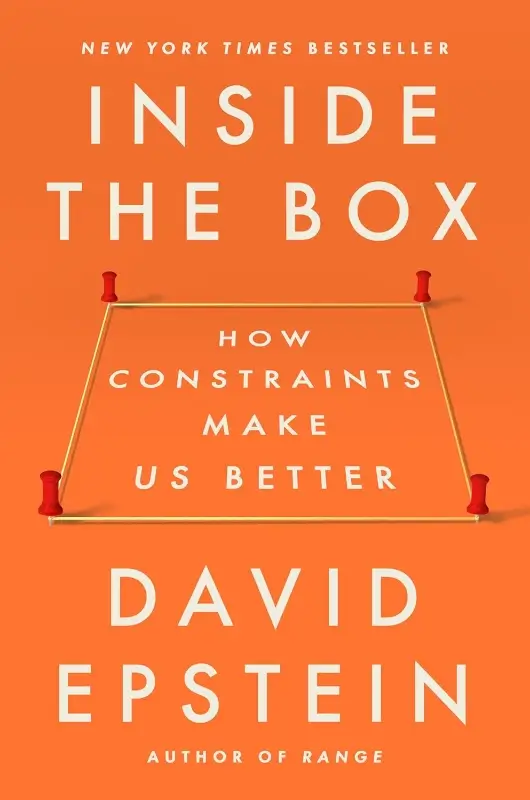
David Epstein‘s Inside the Box: How Constraints Make Us Better challenges the popular belief that creativity comes from “thinking outside the box,” arguing instead that limits, rules, and structured boundaries are often what drive truly original thinking, first published in 2024.
Drawing on research from psychology, business, science, and sports, Epstein shows how constraints force the brain to operate differently — often producing more efficient and inventive solutions than unrestricted freedom.
Core Concepts
The book introduces several key ideas that form the foundation of David Epstein’s theory:
- Constraints as Catalysts for Creativity: Limitations are not obstacles to creativity — they are often the conditions that make it possible.
- Additive vs. Subtractive Thinking: Humans naturally solve problems by adding more (features, options, complexity), but better solutions often come from removing, simplifying, or narrowing.
- Structured Freedom: The best creative environments are not boundless; they are carefully shaped with rules that guide attention and effort.
- Expert Creativity vs. Amateur Creativity: Experts tend to embrace constraints more effectively because they understand the domain deeply enough to work within limitations productively.
- The “Remix” Principle: Innovation is frequently the result of recombining existing ideas within new boundaries rather than inventing from nothing.
These principles show up repeatedly across disciplines — from literature and music to science and engineering — suggesting that constraint is a universal driver of creative excellence.
Chapter-by-Chapter Review
Part I: How Boundaries Create Breakthroughs
The opening section reframes creativity by directly challenging the “limitless possibility” mindset. Epstein argues that a world without constraints does not produce better ideas — it often produces worse ones because people struggle with choice overload and lack of direction.
He introduces the idea that limits can sharpen focus and force deeper engagement with a problem rather than superficial exploration. The concept of “limit-powered learning” shows how constraints can accelerate skill development by narrowing attention and increasing repetition within a focused space.
Part II: Creative Constraints
This section dives into how constraints actively shape creative output. Epstein uses examples like Dr. Seuss’s Green Eggs and Ham, which was famously written using a very limited vocabulary, to show how restriction can force imaginative solutions.
He also explores how remixing existing ideas within strict boundaries often leads to innovation, rather than original creation in isolation. This section emphasises that creativity is often combinational rather than purely generative.
The “building a new box” idea is central here: instead of avoiding constraints, successful creators deliberately design them to stimulate better thinking.
Part III: Where (and How) to Focus
This section shows how constraints focus attention, arguing that too many priorities reduce performance while focus improves creativity.
The idea of “widening the bottleneck” is especially important — instead of expanding everything, you improve outcomes by identifying and strengthening the single limiting factor in a system.
“One thing at a time” reinforces the idea that sequential focus, rather than multitasking or parallel exploration, often produces higher-quality outcomes.
Part IV: Collaboration and Contentment
The final section explores how constraints shape creativity, group dynamics, and satisfaction.
Epstein shows how rules and boundaries within teams can improve collaboration by reducing ambiguity and aligning effort. He also discusses “satisficing” — choosing solutions that are good enough within constraints rather than endlessly searching for the perfect answer.
This is presented not as settling, but as a practical strategy for decision-making under real-world limitations. The book closes by reinforcing that constraints don’t diminish creativity — they often make it more sustainable, collaborative, and effective.
Key Strengths
- Powerful Paradigm Shift: Challenges the “think outside the box” idea with a strong alternative.
- Strong Storytelling: Uses real-world examples to make abstract ideas engaging and clear.
- Cross-Disciplinary Evidence: Draws from multiple fields to show constraints shape creativity.
- Highly Practical Insight: Offers usable ideas like limiting options and focusing on bottlenecks.
- Clear Thesis: Despite varied examples, the core message stays consistent and easy to grasp.
Potential Drawbacks
- Repetitive Case Studies: Some examples repeat similar ideas over time.
- Light Theoretical Depth: Focuses more on storytelling than formal theoretical depth.
- Anecdotal Emphasis: Relies mainly on illustrative stories rather than strict data.
Who This Book Is For
This book is a valuable resource for a wide range of readers, particularly:
- Creative professionals who feel stuck in traditional “brainstorming” approaches
- Business leaders and managers designing systems or workflows
- Students or learners trying to improve problem-solving skills
- Anyone overwhelmed by options or interested in psychology, innovation, or decision-making.
Final Review
“Inside the Box: How Constraints Make Us Better” is a refreshing and counterintuitive take on creativity that challenges one of the most deeply ingrained beliefs in modern culture. David Epstein makes a strong case that constraints are not barriers to innovation but often the very conditions that produce it. While the book sometimes relies heavily on anecdotal evidence and could benefit from deeper theoretical structure, its core insight is both memorable and useful: the right limits don’t shrink creativity — they shape it.
Rating: 4.2/5
A highly readable and thought-provoking book that reshapes how you think about creativity, problem-solving, and innovation.
Alternative Books
Here are three related books that further explore this topic:
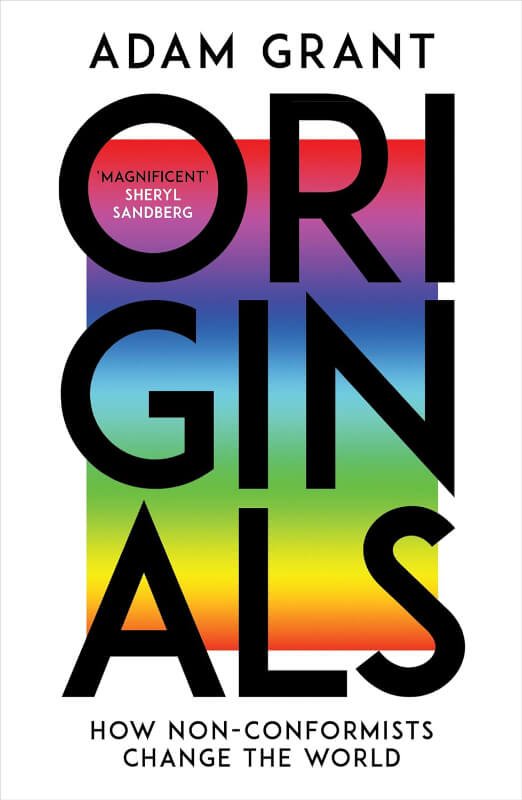
“Originals: How Non-Conformists Move the World” by Adam Grant
Adam Grant shows how anyone can champion ideas and overcome doubt a compelling read on creative problem solving.
Rating: 4.5/5
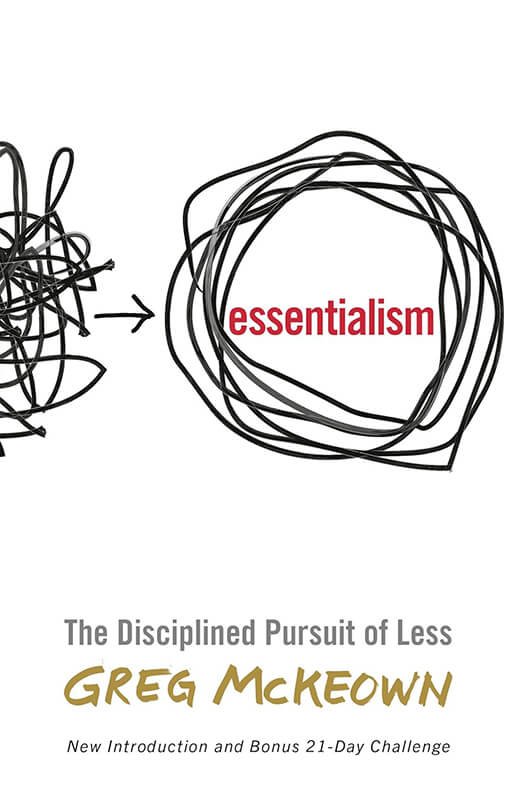
“Essentialism: The Disciplined Pursuit of Less” by Greg McKeown
Greg McKeown makes the case for doing less but better — perfectly aligned with the book’s core argument that narrowing your focus unlocks greater creative output.
Rating: 4.6/5
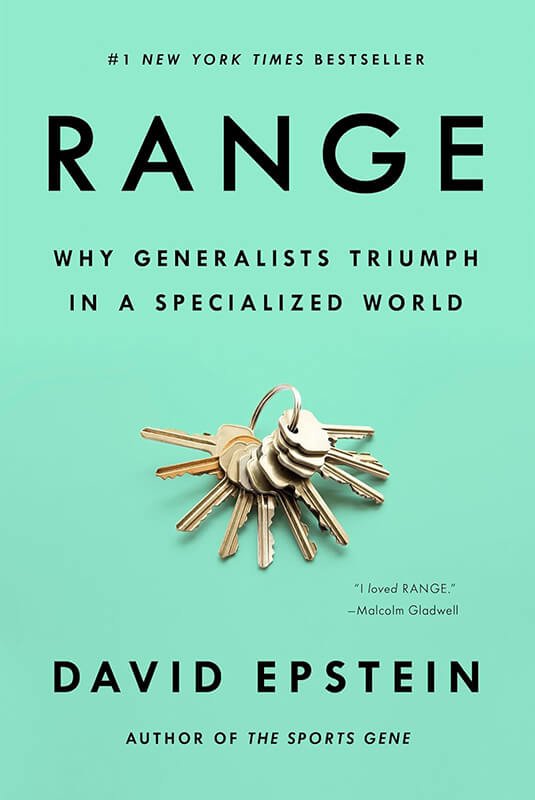
“Range: Why Generalists Triumph in a Specialized World” by David Epstein
Another book by David Epstein, Range challenges the “10,000 hours” and argues broad experience drives success more than narrow specialisation.
Rating: 4.6/5