
You don’t need to be a financial genius to achieve financial freedom—you just need a plan and the discipline to follow it. This guide shows you a simple path to financial freedom by helping you reduce debt, grow savings, and make your money work for you. By taking consistent, straightforward steps, you can gain control, security, and the freedom to live life on your terms.
Inside this article:
TL;DR
Financial freedom doesn’t require extreme wealth—just consistent action and smart habits. Start by understanding your current situation, eliminating high-interest debt, and building an emergency fund. Invest in low-cost index funds using a buy-and-hold strategy to harness compound interest benefits. Live below your means to avoid lifestyle inflation, create multiple income streams, and view money as a tool for freedom rather than an end goal. With patience, discipline, and long-term planning, anyone can achieve financial independence and live life on their terms.

1. The Power of Financial Independence
Financial independence isn’t about being rich—it’s about having choices.
When your investments generate enough income to cover living expenses, you work because you want to, not because you have to.
Here’s how it works: if your yearly expenses are $40,000, you’d need $1 million saved (that’s $40,000 × 25). This lets you safely withdraw 4% each year ($40,000) to live on while your investments keep growing.
A 25-year-old investing $500 monthly at 7% returns will have over $1.2 million by age 65, while someone starting at 35 reaches only $566,000.
Key Takeaway: Financial independence gives you control over your time—start building it today by saving aggressively and investing consistently.
2. The Case for Simplicity in Investing
Complex investment strategies rarely beat simple, low-cost approaches.
Low-cost index funds tracking the total stock market outperform actively managed funds because they minimize fees and eliminate emotional decision-making.
Over 15-year periods, fewer than 20% of actively managed funds outperform their benchmark (the standard used to measure performance, like comparing your fund’s results to the overall stock market).
A fund charging 1% annually can consume nearly 30% of returns over 30 years, while low-cost index funds charge just 0.03-0.15%.
| Investment Approach | Average Annual Cost | 30-Year Impact |
|---|---|---|
| Actively Managed | 0.75-1.5% | $380k-$450k lost |
| Low-Cost Index | 0.03-0.15% | $15k-$75k lost |
Key Takeaway: Simple, low-cost index fund investing outperforms complex strategies while requiring minimal effort.

3. Assess Your Current Financial Situation
You can’t improve what you don’t measure.
Calculate net worth by subtracting liabilities from assets. Assets include cash, investments, retirement accounts, and property equity.
Liabilities include mortgages, loans, and credit cards. Track spending for one month to discover where 20-30% of your money actually goes.
Apps like Mint or YNAB (You Need A Budget) automate tracking, revealing invisible spending patterns.
Read Mastering Your Money: Beginner’s Guide to Personal Finance for assessment strategies.
Key Takeaway: Measuring net worth and cash flow reveals your starting point and illuminates the path forward.
4. The Trap of Debt and Consumerism
High-interest debt is the fastest route away from financial freedom.
A $10,000 credit card balance at 18% APR (annual percentage rate—the yearly interest cost) costs $1,800 yearly in interest alone—money that could generate investment returns instead.
Here’s the real impact: $5,000 of credit card debt at 18% costs you $900 annually in interest payments. If you eliminated that debt and invested that same $900 per year at 7% returns, you’d have $50,000 after 30 years.
Lifestyle inflation—spending more as you earn more—keeps people trapped where higher earnings never translate to security.
Learn tactical approaches in Debt Management: Breaking Free from Debt.
Key Takeaway: Eliminating high-interest debt and avoiding lifestyle inflation frees cash flow that accelerates financial independence.

5. Budgeting and Saving Made Simple
Effective budgeting doesn’t require tracking every penny.
The 50/30/20 rule allocates 50% to essentials (rent, utilities, groceries, insurance, transportation), 30% to discretionary spending (dining out, entertainment, hobbies, shopping), and 20% to savings and debt repayment.
Build an emergency fund covering 3-6 months of expenses. Start with $1,000, then reach six months. Keep emergency funds in high-yield savings accounts (online banks typically offer 4-5% interest compared to traditional banks’ 0.01%).
Set up automatic transfers on payday directing money to savings before you see it.
| Income Level | Monthly Savings (20%) | 30-Year Total |
|---|---|---|
| $50,000/year | $833 | $944,608 |
| $75,000/year | $1,250 | $1,416,912 |
| $100,000/year | $1,667 | $1,889,216 |
Key Takeaway: Simple budgeting combined with automated savings creates consistent progress without constant attention.
6. Embracing a Long-Term Mindset
Patience is the most underrated financial skill.
Wealth accumulates through decades of consistent investing and compound growth. An investment of $10,000 at 7% returns becomes $76,123 after 30 years. Missing just the 10 best market days over 20 years can cut returns by 50%.
The S&P 500 (a collection of America’s 500 largest companies) experiences corrections (temporary price drops of 10% or more) every 1.5 years on average, yet has returned approximately 10% annually over the past century.
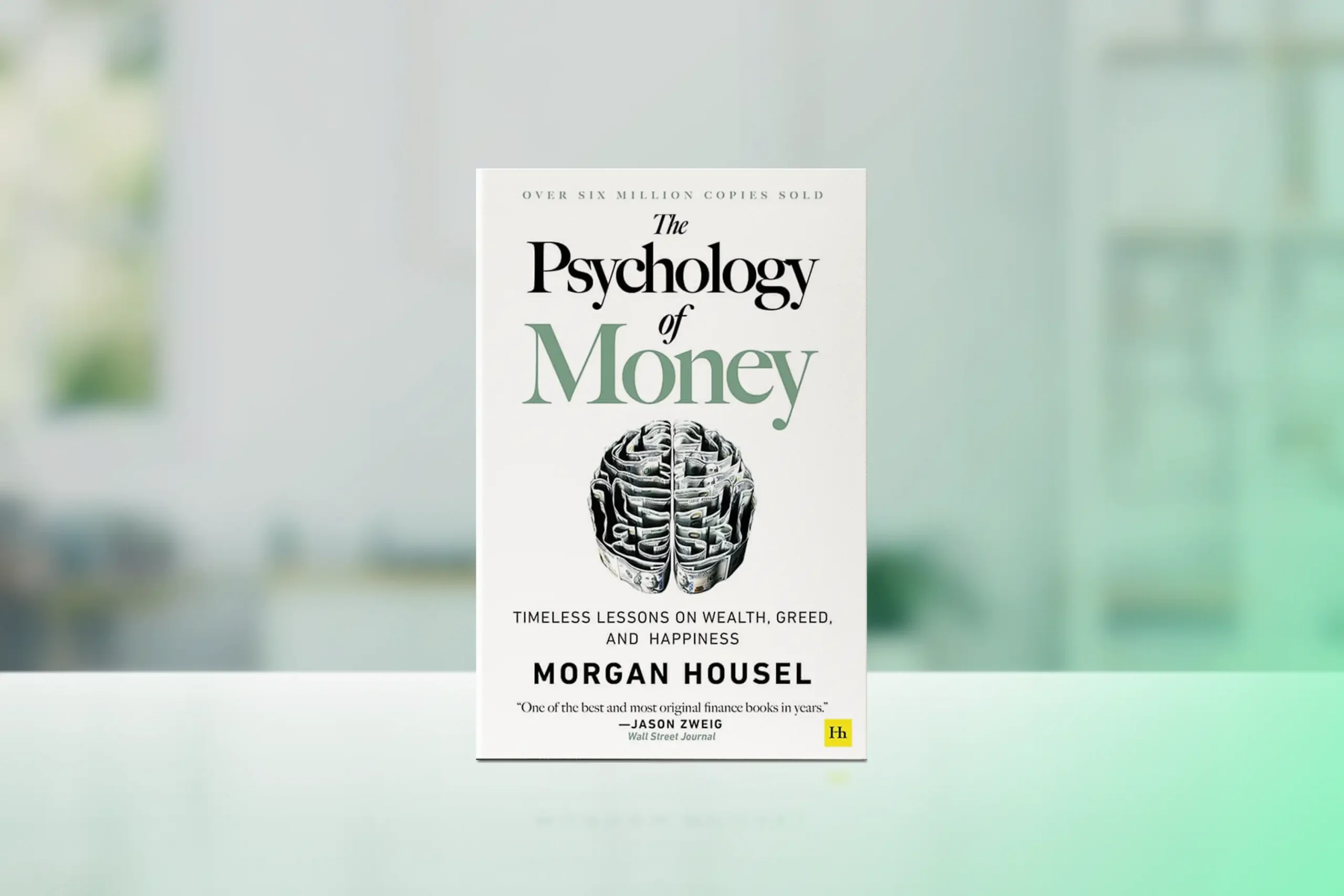
Explore The Psychology of Money by Morgan Housel for wealth-building insights.
Key Takeaway: Long-term thinking harnesses compound growth while avoiding emotional traps that destroy wealth.

7. The Simple Path to Wealth
JL Collins crystallized financial freedom into a repeatable formula.
In his book The Simple Path to Wealth distills decades of wisdom: spend less than you earn, invest in low-cost index funds, avoid debt, and stay patient. Focus on total stock market index funds—these are funds that own small pieces of thousands of different companies automatically.
For example, Vanguard’s Total Stock Market Index Fund (VTSAX) spreads your money across over 3,000 U.S. companies in one purchase. This diversification (spreading risk across many investments) eliminates the danger of betting on individual companies.
Consider opening a brokerage account (a platform where you buy investments) and set up automatic monthly investments.
Key Takeaway: Collins’ simple path provides a proven approach to financial independence through low-cost investing and patience.
8. Building Multiple Income Streams
Relying on a single income source limits wealth-building speed.
Multiple income streams accelerate progress and provide resilience. Active income requires your time every month—your 9-to-5 job, freelance projects you complete, consulting sessions you deliver.
Passive income keeps flowing even when you’re not working—dividends from stocks you own, rent from a property, royalties from a book you wrote once, or sales from an online course you created. A side hustle earning $500 monthly while consuming 40 hours generates just $12.50 hourly.
Choose scalable opportunities—digital products, dividend-paying investments, rental properties that can grow without requiring more of your time.
Key Takeaway: Multiple income streams accelerate wealth building—focus on scalable opportunities aligned with your skills.

9. Money as a Tool, Not a Goal
True wealth isn’t measured by net worth—it’s measured by freedom.
Money enables choices, experiences, and peace of mind. Research shows emotional wellbeing rises with income to approximately $100,000 annually, after which additional income produces diminishing returns on happiness.
Your financial independence number should reflect genuine needs and values rather than arbitrary comparisons. Ramit Sethi encourages spending extravagantly on priorities while being frugal elsewhere.
Key Takeaway: Money is a tool for building the life you want—define “enough” based on personal values.
10. Long-Term Planning
Financial freedom requires ongoing planning and adjustment.
Set clear goals with specific timelines—$50,000 for a down payment in three years, $500,000 for early retirement in 15 years.
Review quarterly, adjusting as circumstances shift. Define short-term (1-3 years), medium-term (3-10 years), and long-term goals (10+ years) with specific amounts and target dates. Annual reviews ensure alignment with current reality.
Key Takeaway: Regular goal reviews ensure your plan evolves with changing circumstances, preserving progress toward independence.
Start Your Journey Today
Financial freedom takes time, but it’s achievable with simple, consistent steps.
Reduce debt, budget wisely, build an emergency fund, and invest regularly in low-cost index funds. Consider adding extra income streams, stay focused on long-term goals, and be patient—spending less than you earn and investing the difference works over time.
Next Steps
- Calculate your net worth by listing all assets and liabilities.
- Track spending for 30 days to see where your money goes.
- Open a low-cost brokerage account (Vanguard, Fidelity, or Schwab).
- Automate monthly investments into a total stock market index fund.
- Build a 3-month emergency fund in a high-yield savings account before increasing investments.
Your financial future depends on habits you control: saving consistently, investing wisely, living below your means, and staying disciplined. Start today—track your net worth, monitor spending, open an investment account, and automate contributions. Small, consistent actions compound into life-changing results.
Important Disclaimer:
This content is provided for educational and informational purposes only and should not be considered financial, legal, or tax advice. It is intended to help build general financial knowledge and a framework for thinking about personal finance topics such as budgeting, saving, emergency funds, goal-setting, investing, and working toward financial independence or financial freedom.
Everyone’s financial situation, goals, income, expenses, risk tolerance, and time horizon are unique, and the information presented may not be appropriate for your specific circumstances. Before making financial decisions, consider consulting a qualified professional for personalized guidance.
Examples and scenarios are for illustrative purposes only and may be based on assumptions or historical information. Actual outcomes will vary, and no financial strategy is guaranteed to be successful. Past performance does not guarantee future results. Market conditions, economic factors, and individual circumstances can significantly impact investment outcomes. What works for one person may not work for another.
This content should serve as a starting point for financial education, not a substitute for professional advice.
Helpful Resources:
-
NAPFA: Connects consumers with fee-only fiduciary financial advisors who must put client interests first
-
CFP Board: Directory of Certified Financial Planner professionals with strict ethics and education standards
-
Investor.gov: Education initiative from the SEC and FINRA offering free resources on investments
-
JumpStart: Nonprofit dedicated to financial education with curated resources and tools
-
Money Helper: Government-backed financial guidance and planning tools
Frequently Asked Questions
How much money do I need to start investing?
You can start investing with as little as $100 or even less at most brokerages. Many platforms like Vanguard, Fidelity, and Schwab have eliminated minimum investment requirements for their index funds. The key is starting early and investing consistently, not having a large sum upfront. Even $50 monthly invested consistently over decades builds substantial wealth through compound growth.
What's the difference between an index fund and a stock?
A stock represents ownership in one single company—if that company struggles, you lose money. An index fund is a collection of hundreds or thousands of stocks bundled together. When you buy one index fund share, you instantly own tiny pieces of many companies. This diversification dramatically reduces risk while capturing overall market growth over time.
How long does it take to achieve financial independence?
Financial independence timelines vary based on your savings rate and expenses. Saving 20% of income typically takes 30-40 years. Increasing to 50% can reduce this to 15-20 years. The math is simple: higher savings rates accelerate your timeline dramatically. Focus on controlling what you can—spending less and earning more—rather than investment returns you can’t control.
Should I pay off debt or invest first?
Pay off high-interest debt (credit cards above 7-8%) before investing heavily. This debt costs more than typical investment returns. However, contribute enough to employer retirement accounts to capture any matching funds—that’s free money. For low-interest debt like mortgages, you can invest while making minimum payments. Build a basic emergency fund first regardless of debt.
What if I can't save 20% of my income right now?
Start with whatever percentage you can manage, even if it’s just 5%. The habit matters more than the amount initially. Review your spending to find areas to cut—subscriptions, dining out, unnecessary purchases. As income increases through raises or side income, direct those gains toward savings rather than lifestyle inflation. Progress beats perfection every time.
Related Articles
Understanding Financial Freedom and How to Reach It
Learn what financial freedom really means and practical steps to achieve it.
Budgeting Made Easy: How to Create and Stick to a Budget
Simple budgeting strategies that work for any income level or lifestyle.
How to Start Investing: A Beginner’s Guide to Growing Your Wealth
Everything you need to know to make your first investment confidently.
Passive Income Guide: How to Make Money While You Sleep
Build income streams that generate money without constant active work.
The Long Game: Why Time Is Your Best Investment Strategy
Discover why patience and consistency beat market timing every time.
Further Reading
“The Simple Path to Wealth” by JL Collins
The definitive guide to achieving financial independence through index fund investing.
“The Psychology of Money” by Morgan Housel
Timeless lessons on wealth, greed, and happiness from behavioral finance expert.
“I Will Teach You to Be Rich” by Ramit Sethi
Practical six-week program for optimizing finances and living your rich life.
“Rich Dad Poor Dad” by Robert T. Kiyosaki
Learn how the wealthy think about money, assets, and building wealth.
“Your Money or Your Life” by Vicki Robin and Joe Dominguez
Transform your relationship with money and achieve true financial independence.