
Creating a budget helps you take control of your finances and make better money decisions. A budget tells your money where to go instead of wondering where it went. This simple plan helps you track income, control spending, and is the first step in helping you reach your financial goals. By learning how to create a budget, whether you’re managing your first paycheck or supporting a family, these 10 steps will help you build a practical budget that works.
Inside this article:
TL;DR
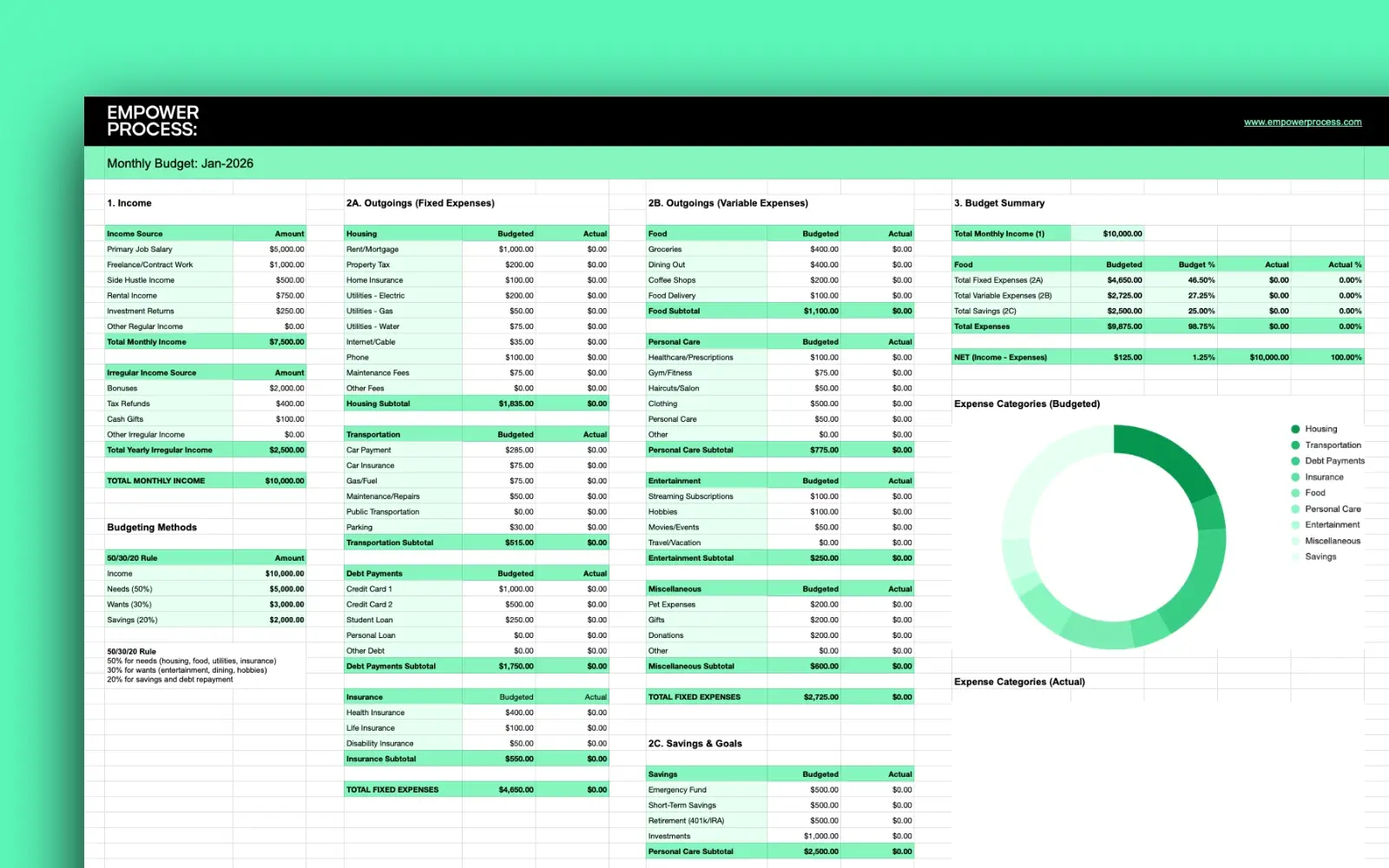
Calculate income, track expenses, categorize spending. Set clear goals and choose a budgeting method (50/30/20, zero-based, or envelope). Build flexibility, automate payments and savings, review monthly. Success comes from consistency, not perfection. Download our Free Budget Planner (Google Sheets)

1. Calculate Your Total Income
Know exactly how much money flows in each month. This foundation determines every decision you’ll make. Accuracy here prevents overspending and unrealistic expectations.
Identify All Income Sources
Start by documenting where your money comes from.
- Salary from primary job
- Freelance or contract work
- Side hustles and gig income
- Rental property income
- Investment returns and dividends
- Government benefits or assistance
Track bonuses, tax refunds, and cash gifts separately as irregular income.
What this achieves: Complete visibility into all money flowing into your accounts each month.
Use Take-Home Pay
Calculate what actually hits your bank account after deductions.
- Subtract taxes from gross income
- Deduct retirement contributions
- Remove health insurance premiums
- Account for other automatic deductions
If income varies, use a conservative 3-6 month average.
What this achieves: Realistic budget based on actual spendable money, not inflated gross income figures.
Account for Variations
Plan for income that fluctuates throughout the year.
- Budget using your lowest expected monthly income
- Map seasonal earnings patterns
- Designate high-earning months for goals
- Build buffer during peak income periods
Use extra income for debt payoff or emergency savings.
What this achieves: Stable budget that works even during low-income months without financial stress.
Key Takeaways: Use take-home pay, not gross income, for accuracy. Always account for irregular earnings and seasonal income variations.
2. Track Your Monthly Expenses
You can’t manage what you don’t measure. Most people underestimate actual spending by 20-30%. Tracking reveals the truth and exposes opportunities for improvement.
Choose Your Method
Select a tracking system that fits your lifestyle.
- Budgeting apps (Mint, YNAB) for automatic categorization
- Spreadsheets for customizable tracking
- Pen and paper for mindful awareness
- Bank app transaction history
The best method is the one you’ll actually use consistently.
What this achieves: Automated or manual system that captures all expenses throughout the month.
Track for 30 Days
Commit to recording every expense for one full month.
- Log all purchases, large and small
- Include cash transactions
- Record subscription payments
- Capture hidden costs like fees
Even that $3 coffee adds up over time.
What this achieves: Reveals your actual spending patterns and where the money really goes.
Review Past Data
Examine your financial history to spot patterns.
- Check 3 months of bank statements
- Review credit card bills
- Identify seasonal expenses (insurance, holidays)
- Note annual costs often forgotten
Understanding daily habits creates accurate budgets.
What this achieves: Historical perspective prevents surprises by planning for irregular expenses.
Key Takeaways: Complete tracking reveals the truth about spending patterns and creates your accurate budget foundation for informed decisions.
3. Categorize Your Spending
Organize expenses into clear categories. This transforms overwhelming data into actionable insights. You’ll see exactly where adjustments will have the biggest impact on your finances.
Fixed vs. Variable
Separate expenses by how much control you have over them.
- Fixed: rent, car payments, insurance, loan minimums
- Variable: groceries, utilities, entertainment, dining out
Fixed expenses stay consistent; variable expenses fluctuate month to month.
What this achieves: Clear view of expenses you can adjust immediately versus long-term changes.
Create Categories
Organize spending into meaningful groups for better visibility.
- Housing: Rent, utilities, maintenance, property taxes
- Transportation: Car payment, gas, insurance, public transit
- Food: Groceries, dining out, coffee shops, delivery
- Personal: Healthcare, gym, clothing, haircuts, prescriptions
- Entertainment: Subscriptions, hobbies, movies, concerts
- Financial: Savings, debt payments, investments, emergency fund
What this achieves: Makes it easy to spot problem spending areas and saving opportunities.
Needs vs. Wants
Distinguish between essential and discretionary spending.
- Needs: housing, food, minimum debt payments, essential healthcare
- Wants: dining out, entertainment, new clothes when current ones work
This reveals where you have flexibility to adjust spending.
What this achieves: Clarity on negotiable expenses when you need to free up money for goals.
Key Takeaways: Clear categories expose spending patterns and show where to adjust spending for maximum impact on financial goals.

4. Set Clear Financial Goals
Goals create purpose beyond tracking numbers. Without targets, budgeting feels like deprivation. Meaningful goals transform discipline into motivated progress toward something better.
Short-Term (1-12 Months)
Set immediate targets you can accomplish within a year.
- Build $1,000 starter emergency fund
- Pay off one specific credit card
- Save for vacation or major purchase
- Catch up on overdue bills
What this achieves: Quick wins that build momentum and prove your budget works.
Medium-Term (1-5 Years)
Plan larger objectives requiring sustained effort.
- Save house down payment
- Pay off student loans
- Build 6-month emergency fund
- Fund career change or education
Connect these to what matters most in your life.
What this achieves: Clear roadmap for major financial milestones that transform your life situation.
Long-Term (5+ Years)
Envision your bigger financial future.
- Retirement savings and investments
- Children’s education funds
- Starting a business
- Achieving financial independence
Even $50 monthly creates meaningful progress through compound growth.
What this achieves: Foundation for long-term security and freedom to live life on your terms.
Key Takeaways: Specific goals transform budgeting from tedious obligation into motivated progress toward the meaningful life you want to build.
5. Choose a Budgeting Method
Pick a framework that matches your situation. No single method works for everyone. Select based on your personality, financial complexity, and how much detail you prefer tracking.
50/30/20 Rule
Simple framework that divides income into three categories.
- 50% for needs (housing, food, utilities, insurance)
- 30% for wants (entertainment, dining, hobbies)
- 20% for savings and debt repayment
If essentials exceed 50%, reduce spending or increase income first.
What this achieves: Straightforward guidelines perfect for beginners without overwhelming detail.
Zero-Based Budget
Assign every dollar a specific job until income minus expenses equals zero.
- List all income at the top
- Allocate to each expense category
- Assign remaining dollars to goals
- Ensure the final balance is exactly zero
Requires more planning but maximizes intentional control.
What this achieves: Complete awareness of where every single dollar goes each month.
Envelope System
Allocate cash or digital funds to specific spending categories.
- Create envelope for each variable expense
- Load budgeted amount at month start
- Stop spending when envelope empties
- No borrowing between envelopes
Works well for chronic overspending in specific areas.
What this achieves: Tangible spending limits that prevent overspending through physical or visual cues.
Which Budgeting Method is Best for You
Each budgeting method works best for different situations and personalities. Consider your financial complexity, how much detail you prefer tracking, and your biggest spending challenges. Use this comparison to find the method that matches your needs.
| Method | Advantages | Disadvantages |
|---|---|---|
| 50/30/20 Rule | Simple and quick to set up, easy to remember, flexible within categories, perfect for beginners | Less detailed tracking, may not work if essentials exceed 50%, less control over specific spending areas |
| Zero-Based Budget | Complete control over every dollar, maximizes intentionality, reveals wasteful spending, great for debt payoff | Time-intensive to set up and maintain, requires detailed tracking, can feel restrictive initially |
| Envelope System | Visual and tangible limits, prevents overspending, works well for problem categories, builds discipline | Requires cash or digital envelope app, less convenient for online shopping, rigid monthly boundaries |
Key Takeaways: Choose your budgeting method based on your financial complexity, tracking preferences, and spending habits for sustainable long-term success.
6. Create Your Budget Plan
Build your working budget. This is where tracking data, categories, and goals come together into your concrete monthly plan. Put everything in writing.
Allocate to Categories
Assign specific dollar amounts using your chosen method.
- Start with fixed expenses (non-negotiable)
- Allocate to financial goals and savings
- Distribute remainder to variable expenses
- Cut variable categories if expenses exceed income
What this achieves: Clear spending limits for every category that add up to your total income.
Prioritize Essentials
Follow this order when allocating limited funds.
- Housing, utilities, insurance
- Food and transportation
- Minimum debt payments
- Basic savings
- Everything else by priority
What this achieves: Protection of critical needs first, then strategic allocation of remaining resources.
Document Your Budget
Create written or digital record of your complete plan.
- Use spreadsheet, app, or written ledger
- Show income, expenses by category, remaining balance
- Make it easily accessible for daily reference
- Update when financial situation changes
I Will Teach You to Be Rich by Ramit Sethi offers practical frameworks.
What this achieves: Reference document that guides daily spending and tracks monthly progress.
Key Takeaways: A written plan transforms abstract financial intentions into concrete daily spending decisions that guide meaningful progress.
7. Build in Flexibility
Rigid budgets fail—build in adaptability. Life throws curveballs and unexpected expenses. Successful budgets accommodate reality while maintaining overall control and progress toward your goals.
Create Buffers
Build cushion for unpredictable expenses.
- Add 5-10% miscellaneous category
- Adjust buffer size as you track patterns
- Use for expenses that don’t fit other categories
- Replenish monthly
What this achieves: Small surprises get absorbed without derailing your entire budget plan.
Plan Irregular Costs
Convert annual expenses into manageable monthly amounts.
- List annual/semi-annual costs (insurance, gifts, maintenance)
- Divide total by 12
- Save that amount monthly in separate account
- Use funds when bills come due
What this achieves: Predictable irregular expenses stop feeling like emergencies that blow your budget.
Adjust as Needed
Give yourself permission to reallocate when reality differs from plan.
- If one category consistently over, another under—reallocate
- Track adjustments to understand true spending patterns
- Aim for sustainability over perfection
- Revise quarterly as you learn
Stay motivated through adjustments.
What this achieves: Budget that reflects real life, not wishful thinking, increasing long-term success.
Key Takeaways: Flexible budgets acknowledge real life unpredictability while maintaining overall financial control and steady progress.
8. Automate Your Finances
Remove willpower—let systems work for you. Automation dramatically increases success rates. Your budget runs in the background without constant manual effort or decision fatigue.
Auto-Pay Bills
Schedule fixed expenses to pay automatically.
- Set up automatic payments for rent/mortgage
- Automate utilities and insurance
- Schedule loan minimums
- Time payments for shortly after payday
Maintain sufficient buffer to cover automatic withdrawals.
What this achieves: Critical obligations always met on time, zero late fees, reduced mental load.
Automate Savings
Make saving automatic so it happens without willpower.
- Set transfer from checking to savings on payday
- Automate retirement account contributions
- Schedule investment deposits
- Start small ($25-50) and increase over time
“Pay yourself first” before discretionary spending consumes available funds.
What this achieves: Consistent savings growth even when motivation fades or life gets busy.
Separate Accounts
Auto-transfer budgeted amounts to different accounts for clear visibility.
- Groceries account gets food budget
- Entertainment account gets fun money
- Bills account covers fixed expenses
- Emergency fund separate from regular savings
The Psychology of Money by Morgan Housel explains why simple systems work.
What this achieves: Crystal clear picture of available funds for each purpose, preventing overspending.
Key Takeaways: Automation makes progress effortless, working even when motivation fades.

9. Review and Adjust Monthly
Your budget improves through regular review. Monthly check-ins ensure you stay on track. They help identify necessary adjustments before small problems become big ones.
Schedule Reviews
Set recurring appointment to examine budget performance.
- Block last Sunday of each month
- Compare actual to budgeted spending
- Celebrate categories on track or under budget
- Honestly examine overspending areas
What this achieves: Regular accountability check that catches problems before they become crises.
Spot Patterns
Look for spending trends across multiple months.
- Identify consistently over-budget categories
- Find under-budget categories to reallocate from
- Spot painless reductions
- Track net worth growth over time
Free money for savings or emergency funds.
What this achieves: Data-driven insights that reveal your true priorities and spending reality.
Update for Life Changes
Revise budget when major circumstances shift.
- Job changes or income adjustments
- Pay raises or bonuses
- Moving to new location
- Marriage, children, or family changes
- Unexpected medical expenses
Even $100 monthly raise accelerates goal completion by months.
What this achieves: Budget stays relevant and effective as your life evolves and circumstances change.
Key Takeaways: Monthly reviews transform budgeting into a dynamic, evolving, and highly effective financial management system.
10. Stay Motivated and Accountable
Sustain commitment through motivation and accountability. Even the best budget fails without ongoing commitment. Build structures that keep you engaged during challenging months.
Track Progress Visually
Create visual representations that make progress tangible.
- Debt payoff charts showing declining balances
- Savings thermometers tracking goal progress
- Net worth graphs showing monthly growth
- Milestone celebrations (first $1,000, card paid off, 3-month fund)
What this achieves: Numbers become real wins, building momentum and prove the budget works.
Get an Accountability Partner
Share goals with someone who keeps you honest.
- Tell spouse, friend, or family member your goals
- Schedule regular check-ins (weekly or monthly)
- Share progress, challenges, and wins
- Join online financial independence communities
Knowing you’ll report creates powerful motivation to stick with your plan.
What this achieves: Provides accountability to strengthen commitment during tempting moments.
Connect to Values
Regularly remind yourself why you’re doing this.
- What matters more than impulse purchases?
- Reducing financial stress and anxiety
- Funding children’s education
- Retiring early with freedom
- Having choices instead of living paycheck to paycheck
Your Money or Your Life by Vicki Robin helps maintain values-centered perspective.
What this achieves: Deep motivation when temporary pleasures tempt you off track.
Key Takeaways: True motivation comes from connecting daily choices to meaningful goals and building strong accountability structures.
Start Your Financial Future Today
Building a budget is about intentional choices with your money. You have the framework: calculate income, track expenses, categorize, set goals, choose a method, create your plan, add flexibility, automate, review monthly, stay motivated.
Next Steps
- Calculate take-home income this week
- Track all expenses for 30 days
- Write down top 3 financial goals
- Create first month’s budget
- Set up one automatic savings transfer
Your first budget won’t be perfect. What matters is starting and adjusting as you learn. Each month builds financial habits that compound into freedom and choices. Start today.
Important Disclaimer:
This content is provided for educational and informational purposes only and should not be considered financial, legal, or tax advice. It is intended to help build general financial knowledge and a framework for thinking about personal finance topics such as budgeting, saving, emergency funds, goal-setting, investing, and working toward financial independence or financial freedom.
Everyone’s financial situation, goals, income, expenses, risk tolerance, and time horizon are unique, and the information presented may not be appropriate for your specific circumstances. Before making financial decisions, consider consulting a qualified professional for personalized guidance.
Examples and scenarios are for illustrative purposes only and may be based on assumptions or historical information. Actual outcomes will vary, and no financial strategy is guaranteed to be successful. Past performance does not guarantee future results. Market conditions, economic factors, and individual circumstances can significantly impact investment outcomes. What works for one person may not work for another.
This content should serve as a starting point for financial education, not a substitute for professional advice.
Helpful Resources:
NAPFA: Connects consumers with fee-only fiduciary financial advisors who must put client interests first
CFP Board: Directory of Certified Financial Planner professionals with strict ethics and education standards
Investor.gov: Education initiative from the SEC and FINRA offering free resources on investments
JumpStart: Nonprofit dedicated to financial education with curated resources and tools
Money Helper: Government-backed financial guidance and planning tools
Frequently Asked Questions
What is a personal budget?
A budget is a plan for your money. It shows how much money you earn, spend, save, and use to pay off debt. A budget helps you make sure your money is going where you want it to go. It also helps you avoid overspending and prepare for future expenses.
Why is creating a budget important?
A budget helps you stay in control. Without a budget, it’s easy to spend more than you earn. Budgeting helps you track expenses, build savings, and work toward financial goals. It also reduces stress by giving you a clear picture of your finances.
How do I start a budget if I’m a beginner?
Start with your income and expenses. Write down how much money you earn each month. Then list your regular expenses, like rent, food, and bills. Keep it simple at first. You can adjust and improve your budget as you learn what works best for you.
How often should I review my budget?
Review your budget every month. Your income or expenses may change over time. Checking your budget monthly helps you stay on track and fix problems early. Regular reviews make your budget more accurate and easier to follow.
What if I don’t stick to my budget?
That’s normal and okay. Budgeting is a skill that takes practice. If you overspend, look at why it happened and adjust your plan. A budget should be flexible, not perfect. The goal is progress, not perfection.
Related Articles
Mastering Your Finances: The Path to Long-Term Financial Health
Build sustainable financial habits that create lasting wealth and security.
Financial Literacy: The Basics of Budgeting, Saving, and Investing
Master fundamental money management skills for lifelong financial success.
How to Build an Emergency Fund: The Key to Financial Security
Create financial cushion that protects you from unexpected expenses.
Financial Wellness: Overcoming Money Stress and Building Financial Confidence
Reduce financial anxiety and develop healthy money mindset.
25 Simple Habits to Save Money and Create Financial Freedom
Small daily actions that compound into significant savings over time.
Further Reading
“The Total Money Makeover” by Dave Ramsey
Proven plan for paying off debt and building wealth.
“The Richest Man in Babylon” by George S. Clason
Timeless financial wisdom through ancient parables about money management.
“The Simple Path to Wealth” by JL Collins
Straightforward guide to financial independence and early retirement strategies.
“The Automatic Millionaire” by David Bach
Automate your finances to build wealth without budgeting stress.
“Financial Freedom” by Grant Sabatier
Modern approach to achieving financial independence in your thirties.